Verified
First ten days were rough, mostly nausea and some genuinely weird dreams. By week three the cravings dropped off a lot more than I expected. Still smoking the occasional one when stressed but way less than before.
24 Oct 2026

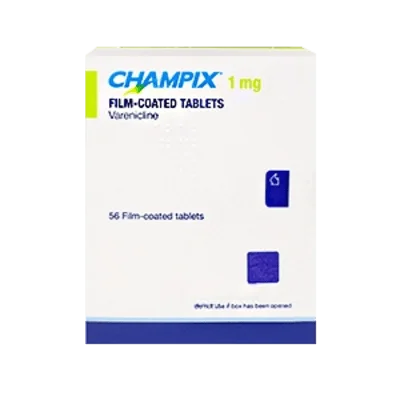
Champix is a prescription smoking-cessation medication containing varenicline for adults who want to stop smoking. It eases cravings and withdrawal by partially stimulating nicotine receptors while making cigarettes less rewarding.
Doctors prescribe Champix for adults who have made a decision to quit and want pharmacological support through the hardest weeks. It is not a tool for casual cutting-down. The WHO lists tobacco dependence as a chronic relapsing condition [1], and Champix is designed to be used as part of a structured quit attempt rather than an occasional aid.
Champix contains varenicline. The product is supplied as film-coated tablets; the dose is stated on the pack — follow the leaflet, with 56 tablets stated on the pack. The exact list of inactive ingredients is not provided here.
Varenicline tartrate is the active ingredient in Champix. It belongs to a drug class called nicotinic receptor partial agonists, and its job is to occupy the same receptors nicotine would normally bind to.
Varenicline attaches to alpha4-beta2 nicotinic acetylcholine receptors in the brain. It activates them partially, which triggers a modest dopamine release — enough to blunt withdrawal discomfort, but far less than nicotine itself produces. At the same time, varenicline physically blocks nicotine from reaching those same receptors. If someone smokes while taking Champix, the cigarette delivers less of a reward because the receptors are already occupied.
This dual action explains two things patients notice early on. First, cravings feel less intense because the receptors are getting partial stimulation anyway. Second, smoking "through" the medication tends to feel flat or unsatisfying, which is often what finally breaks the habit loop. The EMA's assessment of varenicline describes this partial agonist property as central to its efficacy in clinical trials [2].
One nuance worth knowing: varenicline doesn't eliminate cravings completely, especially in the first week. It reduces their intensity.
Champix is indicated for adults who smoke and want to quit. It works best within a structured support program that includes a set quit date, behavioral counseling, and follow-up with a healthcare provider.
Champix isn't the only route to quitting, and it isn't always the first one doctors suggest. Nicotine replacement therapies — patches, gum, lozenges — work by a completely different mechanism: they supply controlled doses of nicotine itself to reduce withdrawal, rather than blocking receptors from nicotine entirely.
| Approach | Mechanism | Typical Use Pattern |
|---|---|---|
| Champix (varenicline) | Partial receptor agonist, blocks nicotine binding | Oral tablet, fixed schedule, 12 weeks |
| Nicotine replacement (patches, gum, lozenges) | Delivers controlled nicotine, no blocking effect | Self-titrated, often combined forms |
| Zyban (bupropion) | Atypical antidepressant with dopamine/norepinephrine effects | Oral tablet, similar prescription course |
Nicotine patches provide steady background nicotine levels throughout the day, while gum and lozenges allow on-demand dosing when a craving hits — useful for situational triggers like after meals or during stressful calls. Neither blocks the receptor the way varenicline does, so smoking while using a patch still delivers a normal nicotine reward, which is why relapse during patch therapy tends to involve actual smoking rather than just a slip-up.
Zyban (bupropion) is the other major oral prescription option. It doesn't act on nicotinic receptors at all — its effect comes through dopamine and norepinephrine pathways, originally developed as an antidepressant. In clinical practice, varenicline tends to outperform bupropion on craving reduction, but bupropion remains relevant for patients with a seizure history where varenicline's receptor-blocking approach may be preferred, or vice versa depending on individual contraindications.
Some patients do better combining a nicotine patch with ad-hoc gum for breakthrough cravings. Others respond better to varenicline's "take the edge off entirely" approach and find patches unsatisfying because they still feel like managing an itch rather than closing a door on smoking.
This is not for you if you have a known hypersensitivity to varenicline, or if you have severe kidney impairment without dose adjustment from a physician. Pregnant or breastfeeding patients should discuss alternatives, since varenicline is not the first choice in those situations.
Nausea is the most frequently reported side effect with varenicline, affecting a substantial portion of users, especially during the first two weeks. It's generally mild to moderate and tends to fade as the body adjusts.
| Side Effect | Management Approach |
|---|---|
| Nausea | Take with food and a full glass of water |
| Insomnia / unusual dreams | Avoid the evening dose too close to bedtime |
| Headache, dry mouth | Usually transient; stay hydrated |
| Constipation | Increase fluid and fiber intake |
Unusual or vivid dreams are a reaction patients rarely expect and almost never get warned about elsewhere. It's a recognized effect of varenicline, not a sign anything is wrong, though it surprises people enough that they sometimes stop the medication out of concern. Insomnia can accompany this; shifting the second daily dose from evening to late afternoon sometimes helps, though patients should confirm timing changes with their prescriber rather than adjusting alone.
Dizziness and headache are usually mild and transient. Dry mouth and constipation respond to the basic fixes anyone would use for either — more water, more fiber.
Serious neuropsychiatric symptoms — including changes in mood, agitation, or behavior — have been studied extensively since initial post-marketing concerns. The FDA required a boxed warning on varenicline in 2009, which was later removed in 2016 after a large safety trial (the EAGLES study) found no significant increase in serious neuropsychiatric events compared to nicotine patches or bupropion [3]. Anyone with a history of depression or psychiatric illness should discuss this history with their doctor before starting, since monitoring is advisable even though population-level risk proved lower than first feared.
Stopping the medication the moment nausea appears is the most frequent misstep — nausea in week one is common and usually temporary, but patients sometimes read it as a sign the drug isn't right for them.
In clinical practice, physicians often set expectations around the two-week mark rather than day one — that's typically when patients report the clearest drop in craving intensity. Craving intensity varies among patients. Sleep patterns can change. Follow-up supports adherence. Prescribers also tend to stress adherence to the titration schedule; stopping or skipping doses during the first week because of nausea is one of the most common reasons a quit attempt on varenicline fails before it really starts.
Doctors generally recommend setting the quit date during week two of treatment, not at the very start. The goal is to let varenicline reach a steady effect before nicotine exposure stops completely, which smooths the whole transition.
Most patients notice reduced craving intensity within the first one to two weeks, though the full effect builds over the titration period. The EMA's 2018 product information for varenicline recommends starting treatment one to two weeks before the planned quit date to allow receptor saturation to build. Full benefit is usually assessed around week four of a standard twelve-week course.
Alcohol tolerance can change during varenicline treatment, and some patients report increased intoxication effects or irritability when drinking. MOHAP guidance on smoking cessation medications recommends moderating alcohol intake during the adjustment period, especially in the first two weeks. It's not an absolute contraindication, but heavy drinking alongside the medication is best avoided.
Smoking during treatment doesn't cause a dangerous interaction, but the cigarette typically feels less satisfying because varenicline is already partially occupying the nicotine receptors. This reduced reward is part of the intended mechanism and is one reason some patients find it easier to let go of the habit gradually rather than quitting outright on day one. The 2018 EMA SmPC describes varenicline's receptor activity and its effect on nicotine reward. A single lapse should be discussed with the treating clinician rather than treated as treatment failure.
Patients with a psychiatric history should discuss it with their prescriber before starting. The 2016 EAGLES trial, a multinational study comparing varenicline, bupropion, nicotine patches, and placebo, found no significant increase in serious neuropsychiatric events with varenicline compared to the other options. Monitoring during the first weeks is still advisable for anyone with a prior mood disorder.
Weight gain during a quit attempt is common regardless of the method used, since nicotine itself suppresses appetite and raises metabolic rate slightly. Varenicline doesn't independently cause significant weight gain beyond what's typically seen when someone stops smoking by any method. Modest increases of a few kilograms over several months are commonly reported across quit-smoking approaches generally. The 2021 WHO report on tobacco control describes weight change as a common challenge after smoking cessation. Patients can discuss nutrition and activity goals with a healthcare professional.
Some prescribers do combine varenicline with low-dose nicotine replacement for patients with very intense cravings, though this isn't the standard approach and should only be done under medical supervision. The two work through different mechanisms — one blocking receptors, one supplying nicotine — so combining them changes the risk-benefit balance and requires individualized dosing guidance from a physician. The 2018 EMA SmPC does not make combination treatment a routine recommendation. A prescriber should review the patient's medical history before adding nicotine replacement.
The standard course runs twelve weeks at the maintenance dose following the initial titration period. Patients who successfully quit smoking during this period may be offered a second twelve-week course by their doctor to reduce relapse risk, a practice supported by long-term abstinence data reviewed by the EMA in 2018. The EMA SmPC describes continued treatment as a clinician-directed option for relapse prevention. Follow-up helps determine whether extending treatment is appropriate.
Your order will be securely packed and shipped within 24 hours. This is exactly what your package will look like (images of an actual item sent). It has the size and look of a regular private letter (24x11x0.7 cm) and its contents cannot be seen.
First ten days were rough, mostly nausea and some genuinely weird dreams. By week three the cravings dropped off a lot more than I expected. Still smoking the occasional one when stressed but way less than before.
I quit on day 11 like my doctor suggested and it stuck. The dry mouth was annoying the whole way through but manageable. Three months smoke-free now.
Had to stop early because the insomnia got bad enough that I wasn't sleeping more than four hours. Went back to my doctor to try a different approach instead.
Nausea was manageable once I started taking it right after breakfast and dinner instead of on an empty stomach. Cravings are maybe half what they were before I started.