Verified
I used Cystone while increasing my daily water intake. Urinary discomfort felt less noticeable after some time, but I still arranged testing because I had experienced stones before.
7 Oct 2026

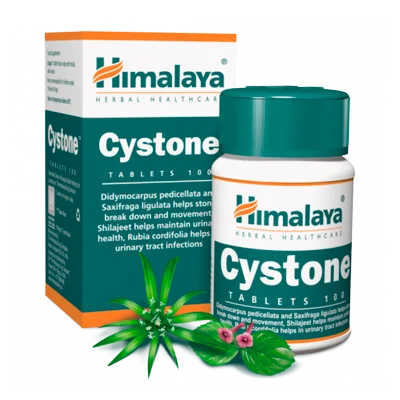
Cystone is a herbal tablet for urinary and kidney support. It is intended for adults seeking support for urinary comfort and healthy urine flow. Its botanical formulation may support urine flow and reduce conditions that encourage crystal aggregation alongside appropriate medical care.
The pack presentation contains 100 tablets. The formulation belongs to the herbal urinary-support category, but the individual botanical quantities should be followed exactly as stated in the product’s regulatory information.
Cystone may be considered for adults who want support for urinary comfort, urine flow, and kidney-stone prevention strategies. Kidney stones can arise from concentrated urine, mineral crystallisation, metabolic conditions, low fluid intake, or dietary factors. A tablet cannot replace assessment when pain, fever, blood in the urine, or reduced urine output occurs.
The formulation belongs to the herbal urinary-support category, but the individual botanical quantities should be followed exactly as stated in the product’s regulatory information.
Use Cystone tablets by mouth according to the dose stated in the product’s regulatory information. The tablets should be swallowed with water, and the recommended schedule should not be exceeded.
Practical administration points include:
A person with heart failure, advanced kidney disease, or a prescribed fluid restriction should not deliberately increase fluid intake without medical direction. Fluid advice must fit the person’s kidney, heart, and electrolyte status.
Cystone is not an emergency treatment for renal colic. Severe one-sided flank pain, fever, chills, repeated vomiting, or difficulty passing urine can indicate obstruction or infection.
Its intended role relates to maintaining urine flow and reducing conditions that encourage crystal aggregation, although the clinical response can vary between individuals.
Crystalluria means crystals are present in urine. Some are microscopic. Others combine into larger deposits. Their formation is influenced by urine concentration, acidity, mineral balance, and the presence of substances that encourage or inhibit crystallisation. Laboratory testing can help identify the pattern.
A botanical urinary-support product may contribute through several proposed actions:
These effects should not be interpreted as proof that an existing stone will dissolve or pass. Stone size, location, composition, and obstruction determine the appropriate clinical approach. The European Association of Urology recommends assessment based on these factors when urolithiasis is suspected [1].
Cystone is used as a supportive herbal preparation for urinary tract and kidney health.
Cystone may be used for supportive urinary comfort, but burning urination with fever, flank pain, vomiting, or visible blood requires prompt medical evaluation.
Cystone may be selected as supportive care within a broader plan that includes adequate hydration, dietary review, and treatment of the underlying metabolic problem.
Cystone may fit a prevention-focused plan when symptoms are mild and no warning signs are present.
The WHO identifies chronic kidney disease and recurrent urinary symptoms as conditions requiring appropriate assessment rather than symptom-only treatment [2].
Cystone occupies a supportive herbal role. Other approaches may be more appropriate when a confirmed diagnosis requires targeted treatment.
| Approach | Main role | Key limitation |
|---|---|---|
| Cystone herbal tablets | Supportive kidney and urinary tract care | Does not replace treatment for obstruction or infection |
| Hydration and dietary measures | Reduce urine concentration and address stone-risk factors | Must be adjusted for kidney or heart disease |
| Clinician-prescribed treatment | Targets infection, gout, obstruction, or recurrent stones | Requires diagnosis and monitoring |
For recurrent calcium stones, clinicians may investigate urine calcium, oxalate, citrate, uric acid, sodium, and volume. Uric-acid stones may require urine alkalinisation or urate-lowering treatment. Infection-related stones need evaluation for persistent urinary bacteria.
It is less suitable as a stand-alone approach when a person has recurrent stones, abnormal kidney tests, pregnancy, a known urinary obstruction, or systemic symptoms.
Drug-interaction information depends on the complete botanical composition and the person’s medicines. Extra caution is needed with medicines affecting kidney function, fluid balance, blood pressure, blood glucose, blood clotting, or uric-acid metabolism.
People taking diuretics, anticoagulants, antiplatelet medicines, medicines for diabetes, or treatment for gout should provide the full medication list before regular use.
Cystone is not for you if you have severe symptoms, suspected obstruction, pregnancy without clinical advice, or an unexplained recurrent stone pattern.
Do not use it for self-management if you have fever, chills, difficulty passing urine, repeated vomiting, visible blood in the urine, significant kidney disease, or a prescribed fluid restriction. Children should not receive an adult herbal tablet unless a qualified prescriber has selected the product and dose. Older adults may need additional attention to kidney function, hydration, and concurrent medicines.
Herbal tablets can cause unwanted effects even when they are plant-based. Possible reactions include stomach discomfort, nausea, altered bowel habits, headache, or an allergic response to one of the botanical components.
Stop use and seek urgent medical attention for facial swelling, breathing difficulty, widespread hives, fainting, or severe weakness. These symptoms can indicate a serious allergic reaction or another acute problem.
Urinary symptoms may also worsen because of the underlying condition rather than because of the tablet. Fever, chills, flank pain, blood in urine, reduced urine output, or persistent vomiting are warning signs. The National Institute for Health and Care Excellence recommends urgent assessment when urinary infection may have progressed to kidney involvement [3].
Patients often overlook the difference between bladder discomfort and obstruction. Burning alone may reflect irritation, while severe colicky flank pain with vomiting can signal a blocked ureter.
Digestive symptoms are more likely to be noticed when tablets are taken on an empty stomach. If the product information permits administration with food, taking it after a meal may improve comfort. The recommended dose should remain unchanged.
Several habits can reduce the usefulness of urinary-support treatment or delay necessary care:
Stone symptoms can resemble muscle pain, appendicitis, gallbladder disease, or a pelvic condition. Recurrent or severe pain deserves assessment rather than repeated self-treatment.
In clinical practice, doctors usually separate supportive urinary care from treatment of the cause. A patient with mild urinary discomfort may need hydration advice and observation, while a patient with fever or obstruction needs prompt investigation.
A doctor would also ask about previous stones, gout, urinary infections, kidney function, pregnancy status, fluid restrictions, and current medicines. These details influence whether a herbal tablet is reasonable and whether laboratory testing is required.
Cystone may be useful within a prevention plan, but expectations should remain realistic. Kidney-stone prevention depends on urine chemistry, fluid intake, diet, body weight, family history, and the type of stone previously passed. The Cochrane Library has reported limited and variable evidence for many interventions used to prevent recurrent urinary stones, making diagnosis and risk assessment important [4].
One practical point is easy to miss: a normal urine appearance does not rule out a stone or urinary infection. Symptoms and test results matter more than colour alone.
Cystone may be used as supportive care for urinary and kidney-stone health, but suitability depends on stone size, location, symptoms, and kidney function. A stone causing obstruction may require imaging or a procedure rather than herbal support. The European Association of Urology describes imaging and stone-risk assessment as central parts of kidney-stone management in its 2025 guidance.
Cystone should not be relied upon as the sole treatment for a suspected urinary tract infection. Fever, back or flank pain, chills, vomiting, or worsening urinary symptoms can indicate kidney involvement. NICE guidance from 2024 supports clinical assessment and appropriate antimicrobial treatment when bacterial infection is suspected.
Cystone should not be presented as a guaranteed stone-dissolving treatment. Stone dissolution depends on the mineral type, with uric-acid stones behaving differently from calcium-based stones. The WHO’s 2022 kidney-health materials support attention to hydration and underlying risk factors, while persistent stones require medical evaluation.
Cystone may be considered alongside a gout plan only after the medicine list and kidney function have been reviewed. It should not replace urate-lowering treatment prescribed for recurrent gout or uric-acid stones. The American College of Rheumatology guideline published in 2020 supports targeted urate-lowering therapy for appropriate patients [5].
The expected response varies with the reason for use, hydration, stone type, and the underlying condition. A rapid change in pain should not be used to confirm that a stone has passed. The EMA provided herbal-medicine safety information in 2023; the product should be used according to its regulatory directions, while persistent symptoms need reassessment.
Pregnancy requires individual assessment because flank pain, urinary infection, and obstruction can affect both the pregnant person and the pregnancy. Herbal products should not be started during pregnancy or breastfeeding without specific clinical advice. The EMA’s herbal-medicine safety information from 2023 addresses safety, exposure, and intended use.
Interactions depend on the complete botanical formula and the person’s medicines. Extra caution applies with diuretics, anticoagulants, diabetes medicines, blood-pressure treatment, gout medicines, and drugs affecting kidney function. A complete medication list should be reviewed before regular use, especially when kidney disease or fluid restriction is present; FDA medication-safety guidance published in 2024 supports this review.
Your order will be securely packed and shipped within 24 hours. This is exactly what your package will look like (images of an actual item sent). It has the size and look of a regular private letter (24x11x0.7 cm) and its contents cannot be seen.
I used Cystone while increasing my daily water intake. Urinary discomfort felt less noticeable after some time, but I still arranged testing because I had experienced stones before.
The tablets were easy to swallow, and I did not notice stomach problems. My main disappointment was expecting quick relief during a painful episode; the pain needed separate medical attention.
I used it as part of a routine for urinary support. The tablets fitted into my schedule, although I found that taking them without food caused mild stomach discomfort.
Cystone was not enough to explain why my stones kept returning. Blood and urine tests identified a problem that required a proper treatment plan.