Verified
Dryness had been bothering me for almost a year before I asked about this. Took about three weeks before I noticed a real difference, and the applicator was easier to use than I expected.
27 Sep 2026

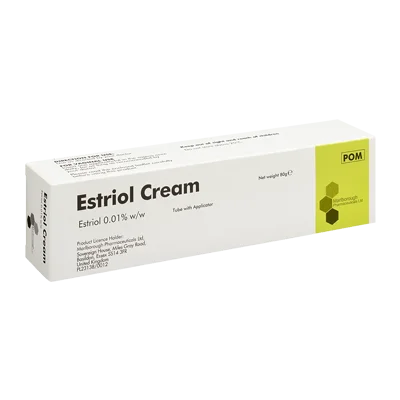
Estriol Cream 0.01% w/w is a prescription-only low-dose vaginal estrogen for postmenopausal women with localized vaginal and vulvar symptoms. It helps restore moisture, elasticity, and epithelial thickness by acting directly on estrogen-deficient tissue.
Estriol is the weakest of the three major estrogens the human body produces, sitting alongside estradiol and estrone in the estrogen family. It occurs naturally and rises sharply during pregnancy, when the placenta produces it in large quantities. Outside pregnancy, circulating estriol levels in postmenopausal women are low, which is part of why targeted estriol therapy exists in the first place.
Estriol Cream is formulated at 0.01% w/w, supplied in an 80 g tube with an applicator for internal vaginal use. The low percentage concentration reflects the drug's intended local action — a small amount delivered directly to the tissue that needs it, rather than a dose designed for systemic absorption.
In clinical practice, this weaker and shorter receptor engagement is what makes estriol useful for localized treatment rather than systemic hormone replacement. A short, less potent signal is enough to restore the vaginal and vulvar tissue that becomes thin, dry, and fragile after menopause, without driving the stronger, longer-lasting proliferative effects that estradiol has on tissues like the endometrium.
Pharmacologists sometimes describe estriol as a "partial agonist" at higher systemic exposures, since it can compete with stronger estrogens for the same receptor sites. At the low concentrations used in topical vaginal formulations, this property matters less than the drug's basic local action: restoring moisture, elasticity, and epithelial thickness in estrogen-deficient tissue .
Estriol cream is used for localized menopausal symptoms driven by falling estrogen levels, including vaginal dryness, irritation, and the tissue thinning known as vulvovaginal atrophy. It is not formulated or indicated as a treatment for hot flashes or systemic menopausal symptoms — those involve central, not local, estrogen pathways, and a cream applied to vaginal tissue is not designed to reach them in meaningful concentrations.
| Symptom treated | Typical response window | Route |
|---|---|---|
| Vaginal dryness / itching | 2–3 weeks | Topical/vaginal |
| Dyspareunia (painful intercourse) | 3–4 weeks | Topical/vaginal |
| Recurrent urinary symptoms | 4–8 weeks | Topical/vaginal |
In clinical practice, physicians observe that women who have struggled for months with dryness and discomfort often notice the earliest relief in tissue elasticity before they notice a change in dryness itself. The two usually catch up within a few weeks of consistent use.
Estriol is also used off-label by some clinicians for recurrent urinary tract infections tied to postmenopausal vaginal atrophy, since restoring the vaginal epithelium helps normalize local pH and the microbial environment [1]. Dyspareunia linked to thin, under-lubricated vaginal tissue is another common reason the cream gets prescribed. Fertility specialists have, in select cases, used estriol to improve cervical mucus quality when hostile cervical mucus is a contributing factor in infertility, though this is a narrower and less common application than vaginal atrophy management [2].
Estriol cream is a single-ingredient, low-dose local vaginal estrogen approach for dryness, irritation, and vulvovaginal atrophy. Unlike oral estrogen therapy, it is applied directly to estrogen-deficient vaginal and vulvar tissue and is not intended to treat hot flashes or other systemic menopausal symptoms.
This medication is not for you if:
Patients with a history of migraine with aura, uncontrolled hypertension, or diabetes with vascular complications should discuss individual risk with their prescriber, since estrogen therapy of any form and dose warrants a tailored risk assessment in these groups .
Local vaginal irritation, itching, or a sensation of burning shortly after application are the most commonly reported effects, and they're usually mild and transient as the tissue adjusts. Breast tenderness or spotting can occur if application technique leads to more systemic absorption than intended — this is uncommon at the labeled 0.01% concentration but worth mentioning to a prescriber if it happens. Vaginal discharge may increase slightly during the first weeks of treatment.
Serious adverse effects are rare at low-dose vaginal use, but any unexpected vaginal bleeding should be reported to a physician promptly, since postmenopausal bleeding always warrants evaluation regardless of its likely cause.
Several patterns show up repeatedly in how this cream gets misused.
Physicians managing postmenopausal patients generally describe vaginal estriol as a low-risk, high-value option when the complaint is specifically genitourinary. One recurring clinical observation: patients often arrive expecting instant relief and need to be told plainly that this is a weeks-long process, not a days-long one. Prescribers also tend to emphasize consistency over dose-stacking — doubling up on application doesn't accelerate healing of atrophic tissue, it just increases exposure without added benefit.
Clinicians managing women on parallel systemic HRT often note that adding low-dose vaginal estriol for persistent local symptoms, even when systemic estrogen is already being taken, is common and generally well tolerated, since the two serve different anatomical targets.
Most patients report initial improvement in tissue comfort within two to three weeks of consistent use, with fuller benefit for dryness and dyspareunia by four weeks. This timeline reflects how gradually vaginal epithelial tissue responds to local estrogen exposure, consistent with clinical guidance from the European Medicines Agency on low-dose vaginal estrogen products. Response can vary depending on the severity of atrophy at the start of treatment. NICE guidance updated in 2024 also supports individualized assessment of symptom response.
No. Estriol cream acts locally on vaginal and vulvar tissue and is not intended or effective for systemic menopausal symptoms like hot flashes or night sweats. Those symptoms involve central thermoregulatory pathways that a topical low-dose local estrogen does not meaningfully reach. Women with both local and systemic symptoms typically need a separate conversation with their prescriber about systemic HRT options. NICE guidance updated in 2024 separates local genitourinary treatment from systemic treatment for vasomotor symptoms.
No. Both are naturally occurring estrogens, but estriol has a weaker and shorter-lasting receptor binding profile than estradiol, which is why it is used for local, low-dose applications rather than systemic hormone replacement. Estradiol is the more potent estrogen typically used in systemic HRT for symptoms like hot flashes . The two are not interchangeable in dose or intended use.
Yes, Estriol Cream is a prescription-only medicine under MOHAP (Ministry of Health and Prevention) regulation, reflecting its status as a hormonal therapy that requires individualized risk assessment before use. A physician needs to confirm the indication and rule out contraindications such as unexplained bleeding or a history of estrogen-dependent cancer before prescribing it. This is standard practice for topical hormone therapies across most regulated markets. NICE guidance from 2024 likewise recommends clinician-led assessment before hormone treatment.
Missing an occasional application does not cause harm — simply resume the regular schedule at the next planned dose rather than doubling up to compensate. Consistency over time matters more than strict daily precision for a therapy aimed at gradual tissue restoration. Prolonged gaps of a week or more may slow the rate of symptom improvement. NICE guidance updated in 2024 emphasizes following the prescribed schedule rather than doubling doses.
It can, under medical supervision, since vaginal estriol targets local tissue while systemic HRT products address body-wide symptoms like vasomotor flashes. The two are not redundant — many women on systemic estradiol-based HRT still experience localized dryness that benefits from added vaginal estriol. Any combination of hormone therapies should be reviewed by the prescribing physician to confirm dosing is appropriate for the individual's full regimen. NICE guidance updated in 2024 supports clinician review when local and systemic hormone treatments are combined.
New or unexpected vaginal bleeding while using estriol cream is not an expected effect and should be reported to a physician rather than monitored at home. Postmenopausal bleeding of any kind, regardless of suspected cause, warrants prompt medical evaluation under standard gynecological practice. Occasional light spotting has been reported with vaginal estrogen use, but it should never be assumed to be harmless without a clinician's review. NICE guidance updated in 2024 recommends assessment of postmenopausal bleeding.
Your order will be securely packed and shipped within 24 hours. This is exactly what your package will look like (images of an actual item sent). It has the size and look of a regular private letter (24x11x0.7 cm) and its contents cannot be seen.
Dryness had been bothering me for almost a year before I asked about this. Took about three weeks before I noticed a real difference, and the applicator was easier to use than I expected.
Helped with the discomfort during intimacy, which is why I started it. First week there was some stinging that worried me, but it settled down once I cut back to every other night.
My doctor had me on this alongside a separate HRT patch for hot flashes. Good for the local symptoms but I want to be clear it did nothing for the night sweats — that's not what it's for.
Honestly expected faster results. It did work eventually but I almost gave up around week two because I didn't feel anything happening yet.
No real complaints. Mild increase in discharge the first couple weeks, nothing alarming. Simple routine once I got used to the applicator.