
Verified
The groin itching reduced after several applications, but the dark mark remained longer than expected. Keeping the area dry helped more than applying extra gel.
12 Oct 2026
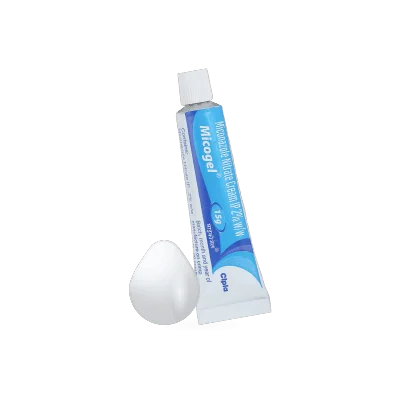
Micogel is a topical antifungal gel containing miconazole nitrate 2% w/w. It is intended for susceptible fungal and yeast infections affecting the skin. Miconazole interferes with fungal cell-membrane formation, helping limit fungal growth when used correctly.
Micogel contains miconazole nitrate 2% w/w, an imidazole antifungal for topical use. The product is supplied as a gel in tubes and is applied to affected skin rather than taken by mouth. Miconazole is used against several fungi and yeasts, including organisms associated with superficial Candida infections and dermatophyte infections such as tinea cruris.[1]
Miconazole is an imidazole antifungal. It is for topical use. Micogel contains 2% w/w. This equals 2 grams per 100 grams of gel. The medicine is applied to skin.
The treatment is aimed at confirmed or clinically suspected superficial fungal infection. It should not be applied automatically to every itchy, red, or irritated rash because eczema, contact dermatitis, bacterial infection, psoriasis, and other skin conditions can look similar.
Micogel may be used for fungal skin conditions involving areas such as the groin, body folds, trunk, feet, or other superficial sites when the causative organism is susceptible to miconazole. Tinea cruris is the medical term for a fungal infection of the groin, commonly called jock itch.
The gel does not treat every cause of genital itching, redness, or burning. Pain, pus, fever, marked swelling, open sores, or rapidly spreading inflammation require clinical assessment because these features may indicate a different or more extensive problem.
Use Micogel on clean, thoroughly dried skin. Apply a thin layer to the affected area and follow the frequency and treatment duration specified by the product’s regulatory instructions or prescriber.
Micogel is intended for external skin use. Avoid applying it to broken, severely inflamed, or ulcerated skin unless a clinician has directed you to do so. Accidental contact with the eyes can cause irritation; rinse promptly with clean water if this occurs.
Do not share the tube, towels, clothing, or personal grooming items used on the affected area. Wash clothing and towels regularly, and allow skin-contact fabrics to dry completely.
Moisture control is useful in tinea cruris and other fold infections. Dry between the toes and within skin folds after bathing. Change damp clothing promptly, especially after exercise.
Hygiene cannot compensate for an incorrect diagnosis or incomplete treatment. Repeated self-treatment may delay recognition of eczema, psoriasis, bacterial infection, or another condition requiring a different approach.
Fungal cells need a substance called ergosterol to maintain the structure and function of their cell membrane. Miconazole interferes with ergosterol production. The fungal membrane becomes weakened, which limits growth and can contribute to the death of susceptible fungal cells.[2]
This action differs from antibacterial treatment. Bacteria and fungi have different cellular structures, so an antifungal gel should not be expected to treat a bacterial rash.
Miconazole has activity against some Candida species, which can cause yeast infections on moist or damaged skin. Candida-related rashes often affect skin folds and may produce redness, soreness, itching, or small spots around the main irritated area.
Symptoms can begin to settle before the organism has been fully controlled. Stopping as soon as the itching improves can leave viable fungus behind and increase the chance of recurrence.
Micogel may be selected for superficial infections caused by susceptible fungi or yeasts. The appearance of a rash alone cannot confirm the diagnosis, so persistent or atypical symptoms deserve review.
| Condition | Typical features and sites |
|---|---|
| Superficial Candida infection | Moist red rash, soreness, itching, or small surrounding spots in skin folds |
| Tinea cruris, or jock itch | Itchy, scaly rash around the groin or upper inner thighs |
| Other superficial fungal infections | Scaling, itching, or a defined expanding edge on affected skin |
Tinea cruris usually affects the groin and upper inner thigh. The rash may be itchy and scaly, with a more defined edge than the surrounding skin. The scrotum is often less involved than the adjacent groin skin, though individual presentations vary.
Loose clothing, careful drying, and separate towels can reduce moisture and friction. These measures support treatment but do not replace the antifungal gel.
Seek prompt assessment if the area becomes painful, produces pus, develops blisters, or spreads rapidly. Diabetes, immune suppression, repeated episodes, and extensive involvement also lower the threshold for clinical review.
Candida can thrive in warm, moist skin folds. The rash may appear bright red and tender, with smaller spots near the main area of inflammation. Moisture, friction, recent antibiotic treatment, diabetes, and immune suppression can contribute to recurrence.
Every moist rash is not a Candida infection. If Micogel produces no meaningful improvement or the rash repeatedly returns, the diagnosis may need reassessment.
Miconazole, clotrimazole, and terbinafine are topical antifungal options, but they are not interchangeable in every clinical situation. Selection depends on the suspected organism, infection site, previous treatment, age, pregnancy status, skin condition, and local treatment guidance.
| Active ingredient | Pharmacological context | Practical counselling point |
|---|---|---|
| Miconazole | Imidazole antifungal with activity against some dermatophytes and yeasts | Useful when the suspected infection is suitable for miconazole; apply as directed |
| Clotrimazole | Imidazole antifungal used for several superficial fungal and yeast infections | Selection still depends on diagnosis and site |
| Terbinafine | Allylamine antifungal with strong activity against many dermatophytes | May be chosen when a dermatophyte infection is suspected |
Miconazole can be appropriate for susceptible Candida infections and tinea cruris. Terbinafine may be preferred in some dermatophyte infections, while clotrimazole is another imidazole option. A different active ingredient should not be added or substituted simply because symptoms are slow to improve.
Micogel is not suitable for you if you have previously experienced a serious allergic reaction to miconazole, miconazole nitrate, or another component of the gel. It also requires caution when the rash involves the eyes, mouth, deep wounds, extensive broken skin, or rapidly spreading inflammation.
Obtain clinical guidance before self-treatment when you have:
Miconazole applied to skin usually produces limited systemic exposure, but medicines used on damaged or extensive skin may be absorbed more readily. Tell a clinician about all medicines if treatment involves a large area, prolonged use, or broken skin.
Do not use Micogel if you have had a serious allergic reaction to miconazole, miconazole nitrate, or any other ingredient in the gel. Speak with a clinician before treating a rash near the eyes or mouth, on deep wounds or large areas of broken skin, or when inflammation is spreading quickly.
Stop using the gel and seek urgent medical help for breathing difficulty, facial or throat swelling, widespread hives, or severe blistering. People with diabetes, reduced immunity, recurrent infections, pregnancy, or breastfeeding may need medical guidance before treatment.
Miconazole applied to the skin can cause local reactions. Reported problems include redness, itching, burning, stinging, irritation, and rash. Mild symptoms limited to the application site may settle, but progressive irritation should not be interpreted as evidence that the antifungal is working more strongly.[3]
| Local effects | Warning signs requiring treatment review |
|---|---|
| Mild redness, itching, stinging, or burning | Rapidly worsening inflammation, severe pain, or marked swelling |
| Temporary irritation after application | Blistering, extensive peeling, or a spreading rash |
| Mild dryness or sensitivity | Facial swelling, breathing difficulty, or widespread hives |
A small amount of stinging can occur on sensitive skin. Persistent burning, increasing redness, or a new rash may represent contact sensitivity, irritation from another product, or an incorrect diagnosis.
Avoid fragranced cleansers, deodorants, or other irritating products on the same area during treatment. These can make it difficult to distinguish a medicine reaction from ongoing infection.
Extra care is needed when the affected area is extensive, repeatedly infected, severely inflamed, or close to the eyes or mucous membranes. People with diabetes or reduced immunity may need earlier assessment because fungal skin infections can be more persistent.
Stop using the gel and seek urgent medical help for breathing difficulty, facial or throat swelling, widespread hives, or severe blistering. These symptoms may indicate a serious allergic reaction.
Several practical mistakes can reduce treatment success:
One detail patients often miss is the surrounding skin. Applying only to the most visible central patch may leave the active edge untreated. The affected area and a small surrounding margin should be covered when the product instructions support that approach.
Clinical practice shows that the main causes of poor response are often an incorrect diagnosis, inconsistent application, continued moisture, or premature stopping. A rash that becomes less itchy but continues to expand needs review rather than a thicker layer of gel.
Doctors also look at the shape and location of the rash. A sharply defined, scaly edge may support a dermatophyte infection, while uniform redness in a skin fold may have several possible causes. Visual appearance guides assessment but does not always establish the organism.
For recurrent Candida skin infections, clinicians may evaluate contributing factors such as diabetes, recent antibiotics, immune suppression, occlusive clothing, or persistent moisture. Tinea cruris that repeatedly returns may also require examination of other fungal sites, including the feet.
Micogel is a topical gel containing miconazole nitrate 2% w/w. It is used for susceptible superficial fungal and yeast infections of the skin, including some Candida infections and tinea cruris. A 2022 World Health Organization report on fungal pathogens emphasizes identifying the likely infection before selecting treatment.
Miconazole interferes with the production of ergosterol, which fungi need for a stable cell membrane. This weakens the membrane and limits fungal growth. European Medicines Agency product information from 2024 describes miconazole as an imidazole antifungal for susceptible fungal organisms.
Clean and dry the affected skin, then apply a thin layer at the frequency and for the duration stated in the product instructions or prescribed by a clinician. Wash your hands before and after application, and avoid the eyes, mouth, and internal surfaces. A 2023 U.S. Food and Drug Administration topical-antifungal product document advises following the labelled amount because more product does not produce faster clearance.
Apply the missed dose when remembered unless the next scheduled application is near. In that case, skip the missed application and return to the usual schedule. Do not apply a double layer, because excess gel can increase irritation without correcting the missed treatment. A 2023 U.S. Food and Drug Administration topical-antifungal document gives similar missed-application advice.
Mild local burning, itching, redness, irritation, or rash can occur with topical miconazole. Worsening redness, blistering, facial swelling, breathing difficulty, or widespread hives requires prompt medical attention. A 2022 Cochrane review of topical treatments for fungal skin infections describes local irritation as a possible treatment-related problem and supports matching treatment to the diagnosis.
The appropriate duration depends on the infection site, organism, severity, and product instructions. Continue for the prescribed course rather than stopping immediately after symptoms improve. Persistent, spreading, or recurrent tinea cruris or Candida symptoms require clinical reassessment instead of indefinite self-treatment. European Medicines Agency product information from 2024 advises following the product-specific treatment course.
Arrange medical review when symptoms return repeatedly, fail to improve as expected, or affect a large or sensitive area. Diabetes and immune suppression can increase the likelihood of persistent or recurrent infection. UAE Ministry of Health and Prevention guidance from 2021 supports earlier assessment when a skin infection is extensive, recurrent, or associated with systemic symptoms.
Your order will be securely packed and shipped within 24 hours. This is exactly what your package will look like (images of an actual item sent). It has the size and look of a regular private letter (24x11x0.7 cm) and its contents cannot be seen.
Useful signs include less itching, reduced spread, less scaling, and a gradual return of the skin’s normal texture. Improvement should be assessed over the treatment period specified by the prescriber or regulatory instructions, not after a single application.
Residual pigmentation does not always indicate active fungus. Persistent itch, an enlarging edge, new lesions, or continued scaling suggests that reassessment may be needed.
Treatment may appear unsuccessful when:
Physicians often reassess the diagnosis when a rash does not respond as expected, spreads during treatment, or returns several times. A skin scraping, examination, or other testing may be considered when the diagnosis remains uncertain.
The groin itching reduced after several applications, but the dark mark remained longer than expected. Keeping the area dry helped more than applying extra gel.
The gel was easy to spread and did not leave a heavy residue. I stopped too early at first and the itching returned, so I completed the instructed course the second time.
I noticed burning after each application and the redness became wider. I stopped applying it and had the rash reviewed because adding more gel was clearly making things worse.
The rash improved slowly. The main problem was moisture after exercise, so changing clothes quickly became part of the routine.