Verified
I used it for several nights during a short allergy flare. It reduced the itching, but I felt heavy and slow the next morning, so I stopped driving until the symptoms settled.
27 Sep 2026

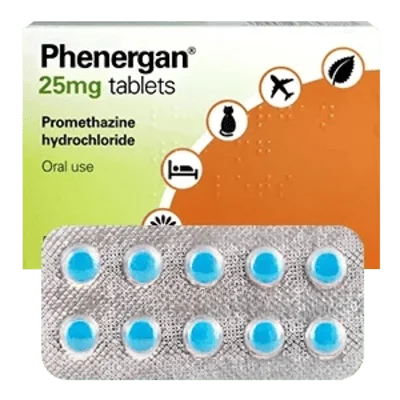
Phenergan is an oral promethazine medicine for adults and eligible children when clinically appropriate. It is used for allergic symptoms, motion sickness, nausea, vomiting, and selected short-term sleep problems. By blocking histamine receptors and reducing activity in nausea-related brain pathways, it can relieve symptoms but may cause sedation.
Promethazine blocks histamine receptors and also reduces activity in the brain areas involved in nausea and wakefulness. The degree of sedation varies with dose, age, and other medicines. Assessment of the indication helps balance symptom relief against impairment.
The dose is stated on the pack — follow the leaflet. Phenergan tablets contain promethazine hydrochloride, a first-generation antihistamine from the phenothiazine group. Promethazine also belongs to the phenothiazine antiemetics, a class used to reduce nausea and vomiting through effects on histamine and other neurotransmitter pathways. The tablet is taken orally.
Promethazine hydrochloride is converted in the body to promethazine, the active pharmacological substance. It blocks H1 histamine receptors, which reduces itching, sneezing, watery eyes, and other allergic symptoms. Its activity in the central nervous system also explains its sedative and antiemetic properties. The FDA prescribing information describes promethazine as an antihistamine with clinically significant central nervous system effects.[1]
Promethazine crosses the blood–brain barrier more readily than many newer antihistamines. This explains why Phenergan can cause pronounced drowsiness, impaired concentration, and slower reaction times. Its anticholinergic activity may contribute to dry mouth, blurred vision, constipation, and difficulty passing urine.
The product described on this page is Phenergan in oral tablet form. The dose is stated on the pack — follow the leaflet. Promethazine is also manufactured in some markets as an oral liquid, and some promethazine products are combined with codeine for cough treatment. Those combination formulations are separate medicines with different risks and dosing requirements.
The usual administration principles are:
Do not crush or chew a tablet unless the dispensing instructions specifically allow it. Altering a solid dose can make administration uncomfortable and may lead to inaccurate dosing. Alcohol should be avoided during treatment because it can intensify sedation and impair coordination.
Promethazine is a first-generation antihistamine that binds to H1 histamine receptors, reducing histamine-driven allergic symptoms. It also acts on central nervous system pathways involved in nausea, vomiting, and wakefulness, producing antiemetic and sedative effects. Its anticholinergic activity contributes to effects such as dry mouth, blurred vision, constipation, and urinary difficulty.
Phenergan may be used for several different clinical problems. The appropriate indication depends on age, symptoms, medical history, and the local product authorisation.
Common therapeutic uses include:
For anaphylaxis, facial or throat swelling, severe breathing difficulty, fainting, or rapidly worsening symptoms, epinephrine is the emergency treatment. Phenergan does not replace epinephrine in anaphylaxis.
A useful clinical distinction is symptom control versus disease treatment. Phenergan can reduce histamine-related symptoms and nausea, while persistent allergic disease, recurrent vomiting, or long-term insomnia may require a different treatment plan.
Phenergan’s main distinguishing feature is the combination of antihistamine activity, antiemetic action, and substantial sedation. The most suitable alternative depends on whether the main target is allergy, motion sickness, nausea, vomiting, or an emergency reaction.
| Active ingredient or category | Main clinical position | Sedation profile |
|---|---|---|
| Promethazine | Allergy symptoms, motion sickness, selected nausea and short-term sleep problems | Often marked |
| Diphenhydramine or chlorphenamine | Allergy symptoms; some products are used for short-term symptomatic relief | Mild to marked, depending on the substance and dose |
| Ondansetron | Selected nausea and vomiting, especially when a non-antihistamine antiemetic is preferred | Usually less sedating, but constipation and headache may occur |
Dimenhydrinate is another antihistamine-based option used for motion sickness and may also cause drowsiness. Cyproheptadine has antihistamine and antiserotonergic activity, but its clinical uses and adverse-effect profile differ from promethazine. Second-generation antihistamines are often preferred for daytime allergy treatment when reduced sedation is a priority.
Antihistamines do not treat anaphylaxis. Epinephrine remains the emergency medicine for airway swelling, severe wheezing, circulatory collapse, or rapidly progressing allergic reactions. A patient who repeatedly needs sedating antihistamines for allergy symptoms may need a longer-term, less sedating approach.
Phenergan is not suitable for everyone. It is not for you if any of the following apply:
Promethazine and MAOIs may produce additive anticholinergic and central nervous system effects. Alcohol can markedly increase sleepiness, poor coordination, confusion, and breathing risk. Opioids, benzodiazepines, sedative antidepressants, sleep medicines, sedating antipsychotics, and some seizure medicines may have similar additive effects.
Paracetamol has no recognised direct interaction that generally prevents combined use, but the total paracetamol dose from all products must remain within the recommended limit. This does not make every combination suitable for every person.
Pregnancy and breastfeeding require an indication-specific assessment. Promethazine may be used in some circumstances, while newborn sedation or irritability is a consideration near delivery and during breastfeeding. The EMA pharmacovigilance framework emphasises assessing medicine exposure against maternal benefit and infant risk rather than treating every pregnancy exposure identically.[3]
This medicine may not be right for you if you are very young, have serious breathing problems, glaucoma, trouble passing urine, or severe drowsiness or depression of the nervous system. Extra care is needed if you are older, have sleep apnoea or chronic lung disease, or use alcohol, opioids, sleeping tablets, anxiety medicines, or other sedatives.
Tell the prescriber about sleep medicines, strong painkillers, anxiety medicines, cough products, and antihistamines. People often remember prescription names but forget that some pharmacy cough or allergy products also cause sedation.
The most recognisable effect of Phenergan is drowsiness. Patients may also experience reduced alertness, dizziness, dry mouth, blurred vision, headache, constipation, or difficulty concentrating. The UK Summary of Product Characteristics identifies sedation and anticholinergic effects among the expected pharmacological consequences of promethazine use.[2]
| Reaction pattern | Examples | Practical significance |
|---|---|---|
| Common pharmacological effects | Drowsiness, dry mouth, dizziness, blurred vision | Avoid driving and activities requiring rapid reactions |
| Anticholinergic effects | Constipation, difficulty urinating, reduced sweating | Greater concern in older adults and people with glaucoma or prostate problems |
| Serious reactions | Breathing difficulty, severe confusion, fainting, abnormal movements | Requires urgent medical assessment |
Respiratory depression is a critical risk in infants and very young children. Promethazine must not be given to children under two years because severe, potentially fatal breathing suppression has been reported with phenothiazine antihistamines. Sedation can also become dangerous when combined with opioids, sleeping tablets, sedative anxiety medicines, alcohol, or other central nervous system depressants.
Older adults may develop confusion, falls, urinary retention, or excessive sedation even at doses tolerated by younger adults. A patient with sleep apnoea or chronic lung disease may be more vulnerable to breathing-related complications.
Blurred vision can make night driving unsafe. Persistent eye pain, halos around lights, or sudden vision changes need urgent assessment because anticholinergic medicines can worsen angle-closure glaucoma in susceptible people.
Several practical errors reduce the benefit of Phenergan or increase its risks:
One easily missed detail is constipation. Sedation receives attention, while reduced bowel movement and urinary difficulty may be overlooked until they become uncomfortable or clinically significant.
Another is hydration during hot weather. Reduced sweating from anticholinergic activity can make overheating more likely, especially in older adults or people working outdoors in the UAE climate.
In clinical practice, doctors usually assess Phenergan by matching its strongest properties to the patient’s main symptom. Its ability to reduce histamine symptoms and nausea can be useful, while its sedation limits daytime use, driving, work at height, and combination with other sedatives.
A clinician will usually ask about age, asthma or chronic lung disease, glaucoma, urinary symptoms, pregnancy, breastfeeding, alcohol use, and current medicines. This screening is not routine paperwork; it identifies the situations in which ordinary drowsiness can become respiratory suppression, confusion, a fall, or urinary retention.
Patients often expect a sleep-inducing effect without next-day impairment. Promethazine can remain clinically noticeable into the following morning, especially in older adults, people with liver impairment, or those taking other sedatives. Persistent insomnia needs assessment rather than repeated self-treatment with a sedating antihistamine.
Phenergan can reduce histamine-related symptoms such as itching, sneezing, watery eyes, and some urticarial reactions. The FDA’s 2017 prescribing information describes promethazine’s antihistamine activity and central nervous system effects. Its sedation makes it less suitable when the person needs full daytime alertness. A severe allergic reaction with breathing difficulty or throat swelling requires epinephrine and emergency care, not oral Phenergan alone.
Promethazine acts on histamine-sensitive and vomiting-related pathways in the brain, which can reduce motion-related nausea and dizziness. The World Health Organization’s 2019 Model Formulary describes antihistamine medicines as options for selected vestibular and motion-related symptoms.[4] It is generally more useful when taken before the journey according to the prescribed timing. Drowsiness, slowed reactions, and blurred vision can make driving unsafe after a dose.
The Phenergan tablets described here contain promethazine hydrochloride and are not codeine combination tablets. Separate promethazine products may be combined with codeine for cough, but those formulations have opioid-specific warnings and are not interchangeable. The 2025 DailyMed promethazine label information distinguishes promethazine-only dosage forms from combination products.[5] Never substitute one formulation for another on the assumption that the dosing is identical.
Paracetamol does not have a recognised direct interaction that routinely prevents use with promethazine. NHS medicine information published in 2025 requires attention to the total paracetamol intake from combination cold and pain products. Phenergan’s sedative effects remain relevant even when paracetamol is used. Avoid exceeding the recommended paracetamol amount or duplicating it across several products.
Children under two years must not receive promethazine because of the risk of severe respiratory depression. The FDA’s 2017 safety information gives specific warnings about potentially fatal breathing suppression in this age group. For older children, suitability depends on the indication, body size, medical history, and prescribed formulation. Adult tablets should not be divided or improvised for a child unless a clinician has provided precise instructions.
Sedation may continue into the following morning, especially after evening use or when other sedatives are present. The 2024 British National Formulary describes promethazine as a centrally acting first-generation antihistamine with a longer sedating effect than many newer allergy medicines. Older age, liver disease, sleep apnoea, and concurrent opioids can extend impairment. Do not drive or operate machinery until alertness and vision have returned to normal.
Phenergan is intended for short-term use when a clinician considers its sedative properties appropriate. NICE guidance from 2022 on insomnia management places emphasis on identifying persistent causes and using structured behavioural treatment rather than relying on sedating medicines indefinitely. Repeated nightly use may lead to ongoing morning impairment, constipation, dry mouth, urinary symptoms, or reduced benefit. Persistent sleep disturbance warrants assessment of the underlying cause and current medicines.
Your order will be securely packed and shipped within 24 hours. This is exactly what your package will look like (images of an actual item sent). It has the size and look of a regular private letter (24x11x0.7 cm) and its contents cannot be seen.
I used it for several nights during a short allergy flare. It reduced the itching, but I felt heavy and slow the next morning, so I stopped driving until the symptoms settled.
The nausea was much easier to manage when the dose was taken before travelling. Sleepiness was noticeable, and I did not drink alcohol during the journey.
The medicine helped me sleep, but dry mouth and constipation became irritating after several days. The treatment was changed rather than continued indefinitely.
Sneezing and watery eyes improved during the first night. The drawback was blurred vision while reading, which cleared after the medicine wore off.