Verified
The first two evenings felt hot and prickly on my neck. By the second week, the itching was much easier to control, and the reaction became less noticeable.
27 Sep 2026

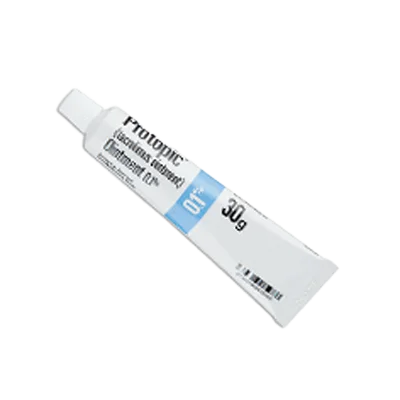
Protopic is a tacrolimus 0.1% ointment for adults and adolescents aged 16 years and older with moderate to severe atopic dermatitis. It helps calm eczema by reducing inflammatory signals from activated immune cells in the skin.
Protopic contains tacrolimus 0.1% in an ointment base. Tacrolimus is a topical calcineurin inhibitor and a non-steroidal anti-inflammatory treatment for atopic dermatitis.
The product is supplied in a tube containing ointment for application to affected skin.
Tacrolimus binds to an intracellular protein called FKBP-12. This complex inhibits calcineurin, an enzyme needed for T-lymphocyte activation. Reduced T-cell activity lowers the production of inflammatory cytokines involved in eczema symptoms.
The medicine is intended for external use. It should not be applied to the eyes, inside the mouth, or to mucous membranes.
The European Medicines Agency describes Protopic as a treatment for atopic dermatitis when conventional topical treatments are inadequate or unsuitable [1].
For adults and adolescents aged 16 years and older, the recommended strength for this product is 0.1% ointment.
Protopic should not be covered with airtight dressings unless a clinician has specifically instructed this. Occlusion can increase absorption and irritation.
If a dose is missed, apply the ointment when remembered if it is not nearly time for the next application. Do not apply extra ointment to compensate.
A common practical error is applying tacrolimus immediately after a hot shower. Heat can intensify the burning sensation. Allow the skin to cool and dry before application.
Tacrolimus suppresses calcineurin-dependent T-cell activation in the skin. This reduces inflammatory cytokine release and helps calm the immune process responsible for eczema flares.
As inflammation settles, patients may experience less itching, redness, rash, swelling, and irritation. Improvement is often gradual rather than immediate. Burning or warmth during the first few applications is common and frequently becomes less noticeable as the flare improves.
The action differs from topical corticosteroids. Corticosteroids reduce inflammation through glucocorticoid receptor activity, while tacrolimus changes local T-cell signalling. This gives Protopic a steroid-free role in eczema treatment, though it still requires careful use because tacrolimus affects local immune activity.
The FDA prescribing information warns that Protopic is intended for intermittent, short-term use and non-continuous chronic treatment when appropriate [2].
Protopic 0.1% ointment is indicated for moderate to severe atopic dermatitis in adults and adolescents aged 16 years and older. It is used when topical corticosteroids have not controlled the condition adequately or when corticosteroids are unsuitable for a specific treatment area.
Atopic dermatitis produces a weakened skin barrier and an exaggerated inflammatory response. Typical symptoms include dry plaques, redness, scaling, fissures, and intense pruritus. Scratching can create small wounds and increase the risk of bacterial infection.
Doctors may select tacrolimus for eczema affecting the face, eyelids, neck, skin folds, or other areas where prolonged corticosteroid exposure requires caution. The medicine treats inflammation; it does not replace regular moisturising care for the underlying barrier problem.
Protopic should not be applied to untreated infected eczema. Bacterial, viral, or fungal skin infections require appropriate management before or alongside anti-inflammatory treatment.
| Treatment approach | Main role |
|---|---|
| Tacrolimus 0.1% ointment | Local immune control for moderate to severe atopic dermatitis, including sensitive sites |
| Topical corticosteroid | Rapid reduction of eczema inflammation, selected according to body site and severity |
| Emollient therapy | Barrier support, dryness control, and prevention of excessive water loss |
Topical corticosteroids may act quickly during a strong flare, while tacrolimus provides a steroid-free anti-inflammatory option for selected patients. Emollients support both approaches but do not suppress the immune inflammation on their own.
Generic tacrolimus ointment contains the same active ingredient and concentration when it is authorised as an equivalent formulation. The ointment base, application feel, and inactive ingredients can differ, so local tolerability may vary even when the pharmacological ingredient is the same.
Protopic is not suitable for you if you have:
Extra caution is needed with:
Tacrolimus absorption through intact skin is generally low, but absorption can rise when the skin barrier is severely damaged or when large areas are treated. The EMA product information identifies infection and immunosuppression risks that require attention during treatment with tacrolimus [4].
Pregnancy and breastfeeding require an individual treatment decision because direct evidence remains limited. Protopic should not be applied to the breast before feeding, and treated skin should not contact an infant’s mouth.
Do not use Protopic if you are allergic to tacrolimus or an ingredient in the ointment, have an untreated infection where you want to apply it, have severe immune suppression, or need treatment inside the eyes, mouth, or on other mucosal surfaces. Speak with a clinician first if you have extensive skin-barrier damage, large affected areas, severe liver disease, repeated herpes infections, swollen lymph nodes, regular ultraviolet therapy, or take medicines that strongly inhibit CYP3A4.
The most common early effects are burning, warmth, stinging, itching, redness, or tingling at the application site. These reactions are usually most noticeable during the first few days and may lessen as the eczema settles.
Other possible effects include:
Stop applying the ointment to an area that develops a rapidly spreading rash, marked swelling, pus, or severe pain until the cause has been assessed. These symptoms may indicate infection or a significant local reaction.
Tacrolimus can increase sensitivity to sunlight. Limit unnecessary exposure to natural or artificial ultraviolet light during treatment. Protective clothing is preferable to relying only on sunscreen over actively inflamed skin.
The long-term cancer risk of topical tacrolimus remains a subject of pharmacovigilance monitoring. Clinical guidance recommends using the lowest frequency that controls disease, avoiding continuous unsupervised use, and limiting application to affected areas. The EMA product information provides the detailed warnings for infection, ultraviolet exposure, and long-term treatment [3].
One detail patients often miss is that a small amount of burning does not automatically mean the medicine has damaged the skin. Persistent or severe pain is different and requires review.
Several errors can reduce treatment benefit or increase irritation:
A useful routine is to apply Protopic to clean, dry skin and use moisturiser at a separate time. This reduces mixing on the skin and makes it easier to identify which product causes irritation.
In clinical practice, dermatologists often reserve Protopic for eczema that affects sensitive areas, returns repeatedly, or cannot be managed comfortably with topical corticosteroids alone. The treatment works best when it is applied to active eczema early, before scratching creates fissures and infection.
A physician usually separates three goals: suppressing the flare, maintaining the skin barrier, and preventing recurrence. Tacrolimus addresses the first and third goals. Daily moisturising addresses the second.
Patients sometimes stop after the first uncomfortable application. Clinicians explain that mild burning can occur at the start, while severe worsening, infection, or persistent intolerance deserves reassessment. The AAD guideline on atopic dermatitis supports topical calcineurin inhibitors as steroid-sparing treatment options for selected patients [5].
Doctors also check whether the diagnosis is correct. Persistent eczema-like lesions can reflect contact dermatitis, psoriasis, fungal infection, scabies, or another skin disorder requiring a different approach.
No. Protopic contains tacrolimus, a topical calcineurin inhibitor rather than a corticosteroid. It reduces T-cell activation and inflammatory signalling in eczema-affected skin. The EMA product information (2024) identifies tacrolimus ointment as a non-steroidal treatment for atopic dermatitis.
Some people notice less itching within several days, while visible inflammation may take longer to settle. Burning or warmth may occur during the first applications and often decreases as the flare improves. The FDA prescribing information (2023) supports continued use until lesions clear, with reassessment if improvement has not occurred after six weeks.
Protopic may be prescribed for facial, eyelid, neck, or skin-fold eczema because these areas can require caution with prolonged corticosteroid exposure. Apply a thin layer and keep it away from the eyes and mucous membranes. The EMA product information (2024) describes these application precautions for tacrolimus ointment. Persistent swelling, severe burning, or eye symptoms require prompt treatment review.
Yes. Moisturiser is often used alongside tacrolimus because eczema involves both inflammation and impaired barrier function. Apply the ointment to affected areas and use the emollient at a separate time to reduce dilution and irritation. NICE guidance (2023) on atopic eczema supports regular emollient use as part of ongoing skin care.
Alcohol is not universally prohibited, but it can cause facial flushing, warmth, itching, or irritation in people using topical tacrolimus. This reaction can be more noticeable when the face is being treated. The EMA product information (2024) describes alcohol-related flushing and warmth as possible reactions. Avoid alcohol if it repeatedly triggers symptoms or worsens the treated skin.
Pregnancy and breastfeeding require an individual assessment because clinical evidence is limited. Avoid applying the ointment to the breast or nipple before feeding, as an infant could ingest the medicine. The EMA product information (2024) provides the relevant reproductive-use precautions.
Increasing pain, pus, honey-coloured crusts, rapidly spreading redness, fever, or grouped blisters can signal infection. Protopic should not be used as the sole treatment for an infected flare. Medical assessment is needed because antibacterial, antiviral, or antifungal treatment may be required; the EMA product information (2024) also requires attention to infection during tacrolimus treatment.
Your order will be securely packed and shipped within 24 hours. This is exactly what your package will look like (images of an actual item sent). It has the size and look of a regular private letter (24x11x0.7 cm) and its contents cannot be seen.
The first two evenings felt hot and prickly on my neck. By the second week, the itching was much easier to control, and the reaction became less noticeable.
The facial eczema improved after several days, especially around the eyelids. I still needed moisturiser because the ointment did not remove the dryness by itself.
I applied too much at first and found the burning uncomfortable. Using a thin film helped, but I needed a treatment review when one area started crusting.
The flare settled over a few weeks, and maintenance use helped reduce repeat episodes. Alcohol caused noticeable facial warmth, so I avoided it during treatment.