Verified
The first weeks were manageable when the tablets were taken at the same time each day. The strongest benefit was the clear boundary around alcohol, although the metallic taste was unpleasant.
27 Sep 2026

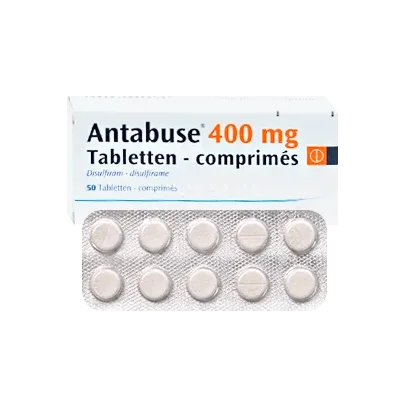
Antabuse is a prescription tablet containing disulfiram for adults with alcohol use disorder. It supports abstinence by blocking alcohol metabolism, so drinking alcohol can trigger a rapid and unpleasant physical reaction.
Antabuse is a brand name for disulfiram, an alcohol-deterrent medicine. Disulfiram belongs to the alcohol-deterrent class.
Antabuse is supplied as tablets containing disulfiram. The pack is marked “Antabuse 400 mg” and contains 50 tablets. The labeled composition identifies disulfiram as the active substance.
After alcohol is consumed, the body converts ethanol into acetaldehyde and then breaks acetaldehyde down into less reactive compounds. The second step depends largely on the enzyme aldehyde dehydrogenase.
Disulfiram inhibits aldehyde dehydrogenase. When alcohol is taken during disulfiram treatment, acetaldehyde rises in the bloodstream faster than the body can clear it. This produces the disulfiram–alcohol reaction, which may begin within minutes and can last for several hours.
The reaction may include:
Severe reactions can cause collapse, abnormal heart rhythm, seizures, unconsciousness, or cardiovascular complications. The intensity cannot be predicted reliably from the amount of alcohol consumed. The body may remain unusually sensitive to alcohol for up to two weeks after the last disulfiram dose.
The mechanism differs from naltrexone, which reduces the rewarding effects associated with alcohol through opioid-receptor blockade. Disulfiram creates an aversive reaction instead. This distinction affects patient selection and the type of support required during treatment.
Antabuse is a brand name for disulfiram, an alcohol-deterrent medicine used within a structured treatment plan for alcohol use disorder and alcohol dependence.
The FDA describes disulfiram as an aid in the management of selected patients with chronic alcoholism who are motivated to remain alcohol-free [1].
Disulfiram is one option among several medicines used in alcohol use disorder. The choice depends on whether the treatment goal is abstinence, reduced heavy drinking, relapse prevention after detoxification, or support for maintaining recovery.
| Treatment approach | Main pharmacological role |
|---|---|
| Disulfiram | Creates an aversive reaction when alcohol is consumed by inhibiting aldehyde dehydrogenase. |
| Naltrexone | Reduces alcohol reward and may reduce heavy-drinking days through opioid-receptor blockade. |
| Acamprosate | Helps support abstinence after stopping alcohol by modulating glutamatergic and GABA-related signalling. |
| Topiramate | An off-label option that can reduce alcohol consumption in some patients through several neurological mechanisms. |
Naltrexone may be less suitable for people taking opioid analgesics or those with significant liver impairment. Acamprosate is cleared mainly through the kidneys and requires attention to renal function. Topiramate can cause cognitive slowing, tingling, weight loss, and mood changes.
Contrave® contains naltrexone with bupropion and is authorised for weight-management indications rather than routine treatment of alcohol use disorder. Its inclusion in a medication history matters because the naltrexone component and the product’s psychiatric and seizure-related considerations may affect treatment decisions.
Clinical guidance from NICE supports selecting alcohol-use-disorder treatment according to medical history, relapse pattern, treatment goals, and the person’s ability to participate in psychosocial support [3].
Disulfiram should not be used in the following circumstances:
Pregnancy requires specialist assessment because the potential risks and benefits must be weighed individually. Breastfeeding also requires a specific clinical decision.
Antabuse is not suitable for every person with alcohol dependence. A clinician should assess liver function, cardiovascular health, psychiatric history, and current medicines before treatment begins.
The disulfiram–alcohol reaction is separate from ordinary side effects caused by disulfiram itself. A person can develop adverse effects without drinking alcohol, while alcohol exposure can cause a much more abrupt and dangerous response.
Common non-alcohol-related adverse effects include:
Liver injury is the most clinically significant toxicity concern. Disulfiram-associated hepatitis can develop after several weeks or months, and severe liver failure has been reported. Warning symptoms include unusual tiredness, loss of appetite, persistent nausea, dark urine, pale stools, yellowing of the eyes or skin, right-sided abdominal pain, or widespread itching.
A patient who develops these symptoms needs prompt medical assessment and liver-function testing. The American College of Gastroenterology identifies medication-related liver injury as a condition requiring careful evaluation of symptoms, timing, and liver-test abnormalities [2].
Disulfiram may also cause optic neuritis, peripheral neuropathy, psychotic symptoms, or mood changes. New numbness, weakness, visual disturbance, confusion, hallucinations, or severe depression require rapid clinical review.
Several practical errors can make disulfiram treatment unsafe or less useful:
One overlooked detail is delayed sensitivity. Even after several days without disulfiram, enzyme inhibition may persist. Another is the difference between a small taste and a harmless taste: with disulfiram, a small amount of alcohol can still produce a severe reaction.
Clinicians generally view disulfiram as a medicine for carefully selected patients who have a clear abstinence goal. It is less useful when a person is ambivalent about stopping alcohol, cannot reliably avoid hidden alcohol exposure, or is likely to take doses inconsistently.
A practical prescribing conversation covers three points:
Doctors also distinguish alcohol withdrawal from relapse prevention. Disulfiram does not prevent seizures or delirium during withdrawal and should not be used as a substitute for medically supervised detoxification.
The World Health Organization recommends combining pharmacological treatment for alcohol dependence with psychosocial interventions and ongoing clinical support rather than relying on a tablet alone [4]. In practice, adherence improves when a trusted person, structured appointment schedule, or supervised dosing arrangement is available.
Antabuse contains disulfiram and is used as part of treatment for alcohol use disorder in adults who aim to remain abstinent. The medicine creates an unpleasant reaction if alcohol is consumed. FDA prescribing information from 2009 describes disulfiram as an aid for selected patients with chronic alcoholism, with treatment requiring patient motivation and clinical supervision . It does not treat acute alcohol withdrawal.
Alcohol sensitivity can continue for up to two weeks after the final disulfiram dose because enzyme inhibition may persist beyond the time the medicine remains measurable in the bloodstream. The FDA product information from 2009 warns that reactions may occur during this period. Avoiding alcohol-containing drinks, foods, and medicines remains necessary after treatment stops until a clinician confirms that the risk has passed.
Disulfiram and metronidazole should not be combined because neurological and psychiatric reactions have been reported. The risk relates to the pharmacological effects of both medicines rather than to alcohol alone. NICE guidance published in 2011 and EMA safety information for disulfiram-containing treatment support checking interacting medicines before therapy begins. A different antibiotic may be required.
Disulfiram mainly deters alcohol consumption by causing a physical reaction if alcohol is taken. It does not directly block craving pathways in the same way as naltrexone, and it does not provide the withdrawal relief associated with medically supervised detoxification. NICE guidance published in 2011 places disulfiram within a broader treatment plan that includes psychosocial support and relapse prevention.
Active hepatitis, severe liver disease, or previous disulfiram-related liver injury can make treatment unsuitable. Disulfiram itself can cause clinically significant liver injury, so baseline and follow-up liver assessment are important. The 2020 LiverTox database maintained by the National Institute of Diabetes and Digestive and Kidney Diseases describes disulfiram as a recognised cause of drug-induced liver injury. Symptoms such as dark urine, jaundice, abdominal pain, or severe fatigue need prompt medical evaluation.
Disulfiram is not a treatment for acute withdrawal. Withdrawal can involve tremor, seizures, hallucinations, severe agitation, and delirium, which require an appropriate medical assessment and urgent care when severe. WHO guidance from 2016 on alcohol-use-disorder management separates withdrawal treatment from longer-term relapse-prevention medication. Disulfiram is considered after the person is medically stable and alcohol-free.
The next step depends on the prescribed schedule and how much time has passed. A missed dose should not be replaced by taking extra tablets unless a prescriber has specifically instructed this. The FDA label from 2009 advises following the prescribed regimen and avoiding unsupervised dose changes. Alcohol must remain avoided even when a dose has been missed.
Your order will be securely packed and shipped within 24 hours. This is exactly what your package will look like (images of an actual item sent). It has the size and look of a regular private letter (24x11x0.7 cm) and its contents cannot be seen.
The first weeks were manageable when the tablets were taken at the same time each day. The strongest benefit was the clear boundary around alcohol, although the metallic taste was unpleasant.
I had mild tiredness and headaches during the first week. My clinician arranged blood tests, and the symptoms improved after the treatment plan was reviewed.
The medicine helped me maintain abstinence alongside counselling. I still needed support with cravings because disulfiram did not remove the urge to drink.
A flavoured product containing alcohol caused flushing and vomiting. I had underestimated how many household products could contain alcohol.