Verified
The first week brought nausea and a dry mouth, but eating smaller meals helped. By the sixth week, evening cravings were less intense. Sleep was worse when I took the last dose late.
27 Sep 2026

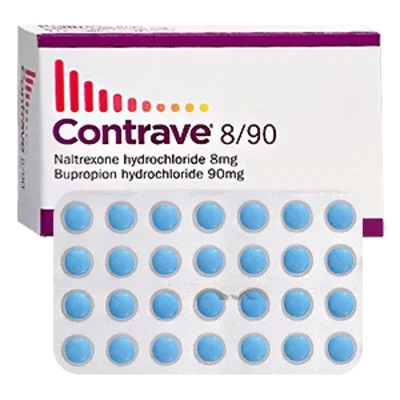
Contrave is a prescription medicine for adults with obesity or overweight who need medically supervised weight management. It is used alongside a reduced-calorie diet and increased physical activity. Its naltrexone-bupropion combination helps influence appetite and food cravings.
Contrave is a prescription weight-management treatment containing naltrexone hydrochloride and bupropion hydrochloride. It is intended for adults with obesity or overweight alongside a reduced-calorie diet and increased physical activity. The combination acts on appetite and reward pathways to help reduce food intake and cravings.
The active ingredients are naltrexone hydrochloride and bupropion hydrochloride. The dose is stated on the pack — follow the leaflet.
Contrave uses a dose escalation schedule. The dose is stated on the pack — follow the leaflet.
Administration points include:
A clinician should review treatment response after the recommended assessment period. If an adult has not achieved clinically meaningful weight loss after the maintenance dose, continued treatment is usually reconsidered.
One practical issue is timing. Taking the evening tablets close to bedtime can worsen insomnia, while taking them with a heavy, fatty meal can increase nausea or dizziness. A consistent breakfast and evening meal routine often makes the schedule easier to tolerate.
Contrave combines two centrally acting substances with different pharmacological actions. Bupropion hydrochloride is an aminoketone antidepressant derivative that affects noradrenaline and dopamine signalling. Naltrexone hydrochloride is an opioid receptor antagonist, meaning it blocks the action of opioid receptors.
Bupropion stimulates neurons involved in the pro-opiomelanocortin, or POMC, pathway. POMC neurons are located in the hypothalamus, a brain region involved in hunger, satiety, and energy regulation. Their activity produces signals associated with reduced food intake.
Naltrexone modifies opioid-receptor signalling in the same appetite-control network. It helps reduce the feedback that can limit POMC activity. The combination also influences the mesolimbic dopamine circuit, which is involved in food reward, cravings, and reinforcement.
The two ingredients therefore work through complementary pathways:
This mechanism differs from a medicine that acts mainly through gastrointestinal absorption or insulin signalling. Contrave acts centrally, so sleep, mood, blood pressure, and neurological history are relevant before treatment begins.
Contrave 8/90 is an extended-release tablet used for chronic weight management in adults with obesity or overweight accompanied by a weight-related health condition. The treatment is used with dietary calorie reduction and regular physical activity, not as a replacement for either measure.
The usual clinical criteria are:
The FDA-approved prescribing information describes Contrave as a long-term weight-management option for selected adults whose weight increases their risk of medical complications [1]. BMI is a screening calculation, not a complete assessment of health. Waist circumference, cardiovascular risk, eating patterns, medication history, and mental health also influence treatment decisions.
Contrave is prescribed for obesity or overweight with associated medical risk. It is not intended for routine cosmetic weight loss in adults who do not meet clinical criteria.
Different weight-management treatments act on different physiological systems. The most suitable option depends on BMI, diabetes status, cardiovascular history, eating patterns, current medicines, and contraindications.
| Approach | Main action | Main limitation |
|---|---|---|
| Contrave | Acts on hypothalamic appetite signals and reward-related cravings | Not suitable with chronic opioid use, seizure disorders, or uncontrolled hypertension |
| GLP-1 receptor agonist therapy | Enhances satiety signalling and slows gastric emptying | Gastrointestinal effects, injection requirements for some products, and treatment-specific contraindications |
| Structured lifestyle treatment | Reduces calorie intake and increases activity through behavioural planning | Requires sustained daily effort and may not produce enough weight loss alone for every patient |
| Bariatric surgery | Changes gastrointestinal anatomy and appetite physiology | Invasive treatment requiring long-term nutritional and medical follow-up |
Contrave may suit an adult whose main difficulty involves food cravings and reward-driven eating, provided the person can use bupropion safely. A GLP-1-based approach may be considered when diabetes, appetite regulation, or metabolic risk points toward that mechanism. Lifestyle treatment remains part of every option.
Contrave has no opioid pain-relieving action. Its naltrexone component can block opioid analgesia, which creates a major prescribing issue for anyone who may need surgery, emergency pain treatment, or opioid-based cough or diarrhoea medicines.
It should not be used in the following situations:
Not for you if you have uncontrolled hypertension, seizure risk, an eating disorder, current opioid use, or another listed contraindication. Ask a clinician to review these risks before prescribing Contrave.
The medication also requires careful review in people with bipolar disorder, psychosis, suicidal thoughts, severe liver disease, kidney impairment, glaucoma risk, or a history of uncontrolled blood pressure. Bupropion can precipitate mania in vulnerable patients.
The most frequently reported reactions include nausea, constipation, headache, vomiting, dizziness, dry mouth, insomnia, and increased blood pressure. Nausea is often strongest during dose escalation and may improve as treatment continues. Bupropion contributes to activating effects such as restlessness, sleep difficulty, tremor, or anxiety in susceptible people.
Common reactions may include:
Serious reactions require prompt medical assessment. These include seizures, severe allergic reactions, marked mood changes, suicidal thoughts, severe hypertension, liver injury symptoms, and acute eye pain or visual disturbance in people at risk of angle-closure glaucoma.
Bupropion can lower the seizure threshold. The risk rises with excessive alcohol use, abrupt alcohol or sedative withdrawal, stimulant misuse, eating disorders, head injury, and medicines that also increase seizure susceptibility.
A useful detail for people undergoing workplace screening is that bupropion has been associated with false-positive amphetamine immunoassay results. A confirmatory laboratory test can distinguish the medicines, so the testing service should receive an accurate medication history.
Naltrexone can cause liver-related problems. Dark urine, yellowing of the skin or eyes, unusual upper-abdominal pain, or persistent severe fatigue should be assessed promptly.
Several avoidable errors can reduce tolerability or create safety problems:
Clinicians generally assess three issues before prescribing Contrave: whether the patient meets weight-management criteria, whether bupropion and naltrexone are medically suitable, and whether the person can follow the escalation schedule.
A realistic clinical expectation is gradual weight reduction rather than an immediate change in appetite. Early nausea or insomnia does not necessarily mean the treatment will be intolerable, but severe symptoms should not be ignored. Blood pressure should be checked before treatment and monitored during dose escalation.
Doctors also look for changes beyond the scale. Reduced evening snacking, fewer cravings, better portion control, improved mobility, and lower waist measurements can show useful progress. Contrave should not be continued automatically when there is no meaningful response.
The treatment has advantages: it is an oral option, it can address craving-related eating, and it does not contain an opioid. Its limitations include central nervous system effects, seizure-related restrictions, blood-pressure concerns, and incompatibility with opioid therapy.
Contrave is approved for chronic weight management in selected adults with obesity or overweight plus a weight-related condition. The 2024 FDA prescribing information describes its use alongside reduced-calorie eating and increased physical activity, with treatment response assessed over time. The clinical benefit differs between individuals, and continued use depends on meaningful progress and tolerability. The key assessment is not appetite alone but sustained improvement in weight-related health risk. Follow-up also includes blood pressure and tolerability.
Some people notice fewer cravings during the first several weeks, while measurable weight change often develops gradually during dose escalation and maintenance treatment. The 2024 FDA product information uses a longer assessment period rather than judging the medicine after a few doses. Sleep disturbance, nausea, and headache can appear before appetite effects become clear. A clinician should evaluate both benefit and adverse reactions throughout the first months.
Naltrexone blocks opioid receptors, so Contrave can reduce or eliminate the pain-relieving effect of medicines such as codeine, tramadol, morphine, or oxycodone. The 2023 EMA product information for the naltrexone-bupropion combination warns that opioid use requires careful planning, including before surgery or emergency treatment. Opioid withdrawal can also occur if treatment begins while opioids remain in the body. Do not alter opioid treatment without a supervised plan.
Contrave should not be used for weight loss during pregnancy because weight reduction has no therapeutic purpose during gestation. 2022 WHO guidance on obesity and reproductive health supports careful management of maternal weight before pregnancy rather than intentional weight-loss treatment during pregnancy. Treatment should be discontinued when pregnancy is recognised. Breastfeeding also requires an individual assessment because both active substances can enter breast milk.
Bupropion can produce activating effects, including insomnia, restlessness, anxiety, agitation, or tremor. The 2023 EMA product information identifies psychiatric and sleep-related reactions among effects requiring clinical attention. Taking the evening dose earlier may reduce sleep disruption, but severe agitation, suicidal thoughts, or major mood changes require urgent medical assessment. People with bipolar disorder need careful screening before treatment.
A missed dose should be skipped rather than replaced with an extra tablet. The next dose should be taken at the regular scheduled time, following the current titration stage. The 2024 FDA prescribing information warns against taking more than the recommended amount because excessive bupropion exposure increases seizure risk. Repeated missed doses may require a clinician to review whether dose escalation should continue.
Your order will be securely packed and shipped within 24 hours. This is exactly what your package will look like (images of an actual item sent). It has the size and look of a regular private letter (24x11x0.7 cm) and its contents cannot be seen.
The first week brought nausea and a dry mouth, but eating smaller meals helped. By the sixth week, evening cravings were less intense. Sleep was worse when I took the last dose late.
Weight loss was gradual rather than dramatic. I noticed fewer unplanned snacks at work, although constipation became annoying and required more fluids and fibre.
Headaches and insomnia were difficult during the second week. My clinician changed the plan after my blood pressure rose, so I did not continue to the full dose.
The tablets were convenient, and appetite control improved after several weeks. I still needed meal planning because the medicine did not prevent eating when I was stressed.