Verified
The first week brought dry mouth and mild nausea. Taking the capsule after breakfast helped. By the fifth week, I was starting office tasks with fewer reminders, although the change was gradual.
27 Sep 2026

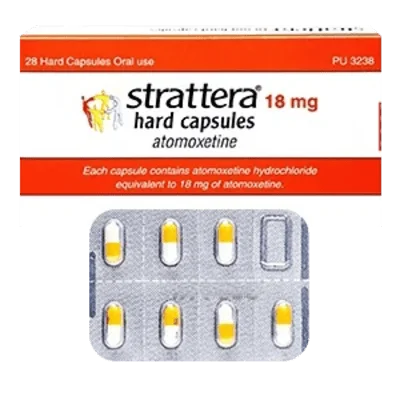
Strattera is a prescription non-stimulant ADHD medicine. It is intended for children, adolescents, and adults who need support with attention and impulse control. Its active ingredient, atomoxetine hydrochloride, increases norepinephrine activity in brain areas involved in attention and executive function.
Strattera is a prescription treatment for attention-deficit/hyperactivity disorder (ADHD) containing atomoxetine hydrochloride. It is used in children, adolescents, and adults when improved attention and impulse control are needed.
Strattera contains atomoxetine hydrochloride, supplied as an oral hard capsule. The dose is stated on the pack — follow the leaflet.
Atomoxetine belongs to the selective norepinephrine reuptake inhibitor group, also called noradrenaline reuptake inhibitors.
The medicine is approved for ADHD treatment and is classified as a non-stimulant treatment. Unlike psychostimulants, atomoxetine does not primarily act by increasing dopamine release throughout the brain. Its clinical role is to support sustained attention, reduce distractibility, and improve control over impulsive behaviour when prescribed at an appropriate dose.
The United States Food and Drug Administration (FDA) recognises atomoxetine as an ADHD treatment for children aged six years and older, adolescents, and adults. Its use in the United Arab Emirates falls within the clinical and regulatory framework overseen by MOHAP, the Ministry of Health and Prevention.
The active ingredient is atomoxetine hydrochloride, equivalent to atomoxetine. Strattera is taken orally as a hard capsule. The capsule should be swallowed intact with water.
Atomoxetine is absorbed through the gastrointestinal tract and processed mainly by the liver. Its effects build with regular daily treatment rather than appearing as an immediate stimulant effect after one capsule.
The product described here is Strattera hard capsules for oral use. The dose is stated on the pack — follow the leaflet. The correct dose depends on age, body weight, liver function, symptom response, adverse effects, and medicines that alter atomoxetine metabolism.
Prescribers usually begin with a lower daily exposure when treatment is being started, then adjust gradually. Children and adolescents are dosed according to the prescribed regimen. Adults follow the prescribed dosing framework. The prescribed capsule may form part of an initial or adjusted regimen, but the prescriber determines whether it is taken alone or alongside another strength.
Administration points include:
Atomoxetine is not an as-needed treatment for occasional concentration problems. Its benefits depend on regular administration and clinical review. The FDA prescribing information also describes weight-based dosing, gradual adjustment, and monitoring during treatment.
One practical problem is confusing atomoxetine with an immediate-release stimulant because both are prescribed for ADHD. Atomoxetine does not provide a short burst of concentration for a single task. It is intended as a regular treatment.
Atomoxetine selectively blocks the presynaptic norepinephrine transporter. This reduces the reuptake of norepinephrine, leaving more of the neurotransmitter available between nerve cells in brain networks responsible for attention, working memory, planning, and impulse control.
Norepinephrine is also called noradrenaline. In ADHD, treatment aims to improve the regulation of attention rather than produce sedation. Strattera can help some patients remain engaged with tasks for longer periods and respond less impulsively during school, work, or daily activities.
The medicine has a different pharmacological profile from psychostimulants. Stimulant treatment acts more directly on dopamine and norepinephrine transport systems, while atomoxetine is a selective norepinephrine reuptake inhibitor. The choice between these approaches depends on age, symptom pattern, previous response, cardiovascular factors, sleep, substance-use risk, and other medicines.
Patients should not expect the same rapid sensation associated with a stimulant. Atomoxetine may require several weeks of consistent use before the full benefit becomes clear. Some changes can appear earlier, but attention and impulse-control improvements are usually assessed over a longer treatment period.
Clinical guidance from NICE places medication within a broader ADHD treatment plan that also considers behavioural support, educational needs, sleep, and family or workplace adjustments. Atomoxetine can be useful when a non-stimulant approach is preferred or when stimulant treatment has not been suitable. [2]
The medicine is approved for ADHD treatment and is classified as a non-stimulant treatment. The United States Food and Drug Administration (FDA) recognises atomoxetine as an ADHD treatment for children aged six years and older, adolescents, and adults.
The main distinction is the treatment mechanism rather than the brand name.
| Approach | Main pharmacological action | Clinical feature |
|---|---|---|
| Atomoxetine | Selective norepinephrine reuptake inhibition | Non-stimulant, gradual daily effect |
| Psychostimulants | Increase dopamine and norepinephrine signalling | Often faster symptom response, with stimulant-related adverse effects |
| Behavioural and educational support | Uses structured environmental and behavioural strategies | Supports functioning and may accompany medicine |
Atomoxetine may be considered when a non-stimulant option is preferred, when stimulant adverse effects are troublesome, or when a patient’s clinical history makes a different mechanism appropriate. Psychostimulants may produce a faster noticeable effect, although appetite reduction, insomnia, increased heart rate, or misuse concerns can affect treatment selection.
Behavioural strategies remain useful with either medication approach. A written routine, reduced distractions, planned breaks, and clear task instructions can make the improvement in attention more practical at school or work.
A doctor also considers whether symptoms occur across more than one setting. ADHD treatment is not based only on occasional poor concentration, tiredness, or exam stress. Diagnosis and follow-up involve developmental history, impairment, and assessment of other possible causes. Clinicians also review sleep, mood, learning needs, and substance use when relevant. This process helps distinguish ADHD symptoms from problems requiring a different intervention.
It should not be used with a monoamine oxidase inhibitor (MAOI), including phenelzine, or during the restricted interval after stopping one. An MAOI must generally be stopped for at least 14 days before atomoxetine begins, and atomoxetine should be stopped for at least 14 days before an MAOI is started. The prescriber must manage both changes.
The medicine may also be unsuitable or require specialist assessment in people with:
Fluoxetine and paroxetine are selective serotonin reuptake inhibitors (SSRIs) that strongly inhibit CYP2D6, the main enzyme involved in atomoxetine metabolism. They can raise atomoxetine exposure and increase adverse effects. A lower starting dose and slower adjustment may be required when either medicine is used.
Other antidepressants, medicines affecting blood pressure or heart rhythm, and drugs that influence liver enzymes may also alter treatment risk. Tell the prescriber about antidepressants, decongestants, asthma medicines, migraine treatments, and non-prescription products before atomoxetine is started.
Strattera is not suitable for everyone. Treatment is NOT for you if you use an MAOI or have certain cardiovascular conditions; a prescriber should assess suitability in those situations.
People with heart disease, fainting episodes, unexplained exercise-related chest symptoms, severe liver disease, glaucoma, uncontrolled high blood pressure, bipolar disorder, psychosis, severe agitation, active suicidal thinking, or a serious allergy to atomoxetine should speak with a prescriber before treatment.
Common adverse effects of atomoxetine include nausea, dry mouth, reduced appetite, constipation, headache, dizziness, tiredness, and sleep disturbance. Some people experience increased heart rate or blood pressure. These effects may be more noticeable during dose adjustment and may lessen as the body adapts.
Gastrointestinal symptoms are frequent early complaints. Nausea can be more troublesome when the capsule is taken on an empty stomach, while constipation may respond to adequate fluids, fibre, and regular movement when those measures are suitable for the individual.
Headache and dizziness can affect driving, cycling, or work involving heights. A person who feels faint or unusually drowsy should avoid those activities until the effect is understood.
Seek urgent medical attention for:
The atomoxetine safety profile includes warnings about suicidal thoughts in children and adolescents, liver injury, cardiovascular effects, and psychiatric symptoms. The FDA Medication Guide provides specific monitoring advice for these risks. [1]
A subtle issue is that a patient can feel more alert but still have poor appetite or sleep. Improvement in one symptom does not mean every adverse effect should be ignored. Weight, pulse, blood pressure, mood, and sleep should be reviewed during follow-up.
Several practical mistakes can make Strattera appear ineffective or less tolerable:
One frequently missed detail is the relationship between atomoxetine and sleep. Taking it late can disturb sleep in some people, while others experience tiredness and tolerate evening administration better. The best timing is individual, but it should not change from day to day without a clear reason.
A second mistake is assuming that a normal appetite at breakfast rules out appetite-related problems. Reduced intake may become apparent at lunch or dinner, especially during the first weeks. Weight trends are more useful than one isolated meal.
In clinical practice, doctors usually set expectations before the first capsule is taken. Atomoxetine is a daily treatment, and the response is assessed over weeks rather than judged after one difficult school day or one productive morning.
A physician will usually track attention, impulsivity, appetite, sleep, mood, weight, pulse, and blood pressure. For children, teachers and parents may provide useful observations because the medicine should improve functioning across daily settings, not only performance during a clinic appointment.
Doctors also look for a meaningful functional change. Completing homework, losing fewer items, interrupting less often, and starting tasks with fewer prompts may show benefit more clearly than a general feeling of being “more focused.”
A limitation is that atomoxetine does not suit every ADHD presentation. Some patients experience nausea, tiredness, irritability, or sleep difficulty without enough improvement in daily functioning. Dose adjustment or a different treatment approach may then be required.
Family members should report abrupt mood changes, self-harm thoughts, unusual aggression, hallucinations, or severe anxiety promptly. These symptoms require clinical assessment rather than waiting for the next routine appointment.
Atomoxetine may begin changing attention or impulsivity during the first few weeks, but the full response can take longer. NICE guidance published in 2018 supports regular review of symptom control and adverse effects during ADHD treatment. A lack of immediate stimulation does not show that the medicine has failed.
Strattera is a non-stimulant selective norepinephrine reuptake inhibitor. The FDA’s 2022 prescribing information describes atomoxetine as acting through norepinephrine transport rather than as a conventional psychostimulant. Its gradual daily effect means patients should not use it as an occasional concentration booster.
Adults can receive atomoxetine when ADHD has been diagnosed and the treatment is clinically appropriate. EMA’s 2013 safety information supports monitoring pulse, blood pressure, psychiatric symptoms, and liver-related warning signs during treatment. Adult dosing still depends on the prescriber’s assessment and other medicines.
Fluoxetine and paroxetine can increase atomoxetine exposure because they inhibit CYP2D6. The FDA’s 2022 prescribing information describes the need for dose adjustment and closer monitoring when strong CYP2D6 inhibitors are used. The combination should be managed by the prescriber rather than adjusted independently.
Phenelzine is an MAOI, and it must not be used together with atomoxetine. The FDA’s 2022 prescribing information requires a washout interval of at least 14 days between an MAOI and atomoxetine. The same restriction applies when changing from atomoxetine to an MAOI.
Reduced appetite, nausea, tiredness, and insomnia can occur during treatment. WHO educational material published in 2022 stresses the need to consider functioning, sleep, nutrition, and associated mental-health symptoms in care planning. Recording meal patterns and sleep times can help the prescriber assess whether adjustment is needed.
A missed capsule should not be replaced with a double dose. The next scheduled dose is generally taken at the normal time, unless the prescriber has supplied a different plan. The FDA’s 2022 product information advises avoiding extra doses because adverse effects can increase without improving ADHD control.
Your order will be securely packed and shipped within 24 hours. This is exactly what your package will look like (images of an actual item sent). It has the size and look of a regular private letter (24x11x0.7 cm) and its contents cannot be seen.
The first week brought dry mouth and mild nausea. Taking the capsule after breakfast helped. By the fifth week, I was starting office tasks with fewer reminders, although the change was gradual.
I expected an immediate difference and felt disappointed at first. Sleep became lighter when I took it late, so my prescriber helped me move it to the morning. The benefit was still modest at three weeks.
My appetite dropped during the first fortnight and I lost interest in lunch. The problem improved after meal planning, but my family still monitored my weight and reported the change at follow-up.
I noticed fewer impulsive interruptions during meetings. I also had constipation and occasional dizziness, which made driving uncomfortable on some mornings. Those symptoms needed discussion rather than being pushed aside.