Verified
My lips became dry during the first week, so I started applying balm several times a day. The painful nodules reduced substantially by the third month, but I needed lubricating eye drops while wearing contact lenses.
19 Oct 2026

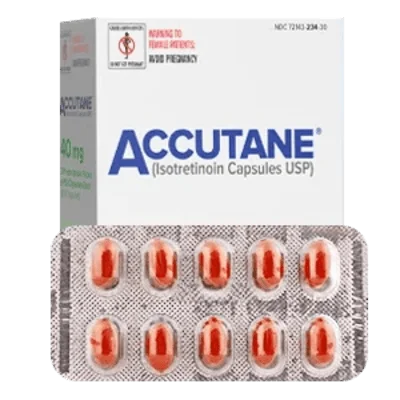
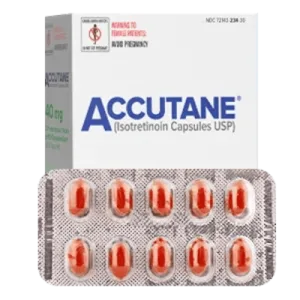
Accutane is a prescription oral retinoid for severe, nodular, cystic, or treatment-resistant acne. Its active ingredient, isotretinoin, reduces sebaceous-gland activity and helps normalise blocked follicles, supporting prolonged remission after a monitored course.
Accutane contains isotretinoin, a systemic retinoid related to vitamin A. The product is supplied as oral capsules, and the dose is stated on the pack — follow the leaflet. It is intended for severe acne that has not responded adequately to conventional treatment. Unlike a topical retinoid, isotretinoin acts throughout the body and requires medical monitoring during treatment.
Isotretinoin is an oral retinoid derived from the vitamin A family. It influences the growth and maturation of skin cells, reduces sebaceous-gland activity, and changes the follicular environment that allows acne lesions to develop.
The treatment is powerful because it addresses several acne mechanisms at the same time. Its strength is also the reason pregnancy prevention, laboratory testing, and medical follow-up are essential.
Acne develops through four linked processes: excess sebum, abnormal shedding of follicular cells, growth of Cutibacterium acnes, and inflammation. Isotretinoin acts on all four pathways rather than targeting only surface bacteria or blocked pores.
Sebaceous glands become smaller and produce substantially less sebum. Less oil reduces the material available to block follicles. Isotretinoin also helps normalise follicular keratinisation, meaning that skin cells are less likely to accumulate into compact plugs inside the pore.
The inflammatory environment changes as well. Reduced sebum and altered follicular conditions limit the growth environment for Cutibacterium acnes, while the retinoid’s biological effects reduce inflammatory activity. The result is a treatment that can suppress the underlying acne process rather than merely drying individual lesions.
Clinical evidence and regulatory information describe isotretinoin as a medicine capable of producing prolonged remission in severe acne, although relapse remains possible and some patients require another medically supervised course [1].
Accutane is reserved for clinically significant acne. Typical indications include:
Mild comedonal acne is not the usual reason for systemic isotretinoin. The risk profile is too serious for casual use when simpler treatments may be suitable.
A dermatologist or appropriately qualified prescriber considers lesion type, scarring, previous treatments, medical history, pregnancy potential, mental-health history, liver health, lipid levels, and concurrent medicines before starting treatment.
Different acne treatments act at different points in the disease process. Topical medicines may be suitable for mild or moderate acne, while oral isotretinoin is reserved for severe or treatment-resistant disease.
| Treatment category | Main action | Typical clinical role |
|---|---|---|
| Isotretinoin capsules | Systemically reduce sebaceous-gland activity and follicular abnormality | Severe nodular, cystic, scarring, or treatment-resistant acne |
| Topical retinoids such as tretinoin or adapalene | Normalise follicular cell turnover | Comedonal and inflammatory acne requiring local treatment |
| Benzoyl peroxide or salicylic acid | Reduce surface bacteria, inflammation, or follicular blockage | Mild to moderate acne and combination regimens |
Benzoyl peroxide can reduce Cutibacterium acnes and is often used in topical acne plans. Salicylic acid helps loosen follicular material but may irritate already sensitive skin. Tretinoin and adapalene normalise cell turnover at the follicle, though they do not produce the same systemic sebaceous-gland suppression as isotretinoin.
Niacinamide may support barrier comfort and reduce visible redness in some topical routines, but it is not a substitute for isotretinoin in severe nodular acne. The choice depends on lesion type, scarring risk, previous response, pregnancy status, and tolerability.
Isotretinoin is a potent human teratogen. Pregnancy must be excluded before treatment, prevented reliably throughout treatment, and avoided for at least one month after the final dose. Exposure during pregnancy can cause severe fetal malformations, miscarriage, and serious developmental harm.
People who can become pregnant require a documented pregnancy-prevention plan and pregnancy testing according to the prescriber’s protocol. Contraception requirements may include one highly effective method or two complementary methods, depending on local regulatory practice and individual circumstances. Breastfeeding is generally avoided during isotretinoin treatment.
Do not combine isotretinoin with tetracycline antibiotics unless a specialist has explicitly directed otherwise. The combination may increase the risk of raised intracranial pressure.
Avoid vitamin A supplements unless the prescriber has specifically approved them. Isotretinoin belongs to the vitamin A family, and additional vitamin A can intensify toxicity.
This treatment is NOT for you if you have severe liver disease, uncontrolled lipid abnormalities, are pregnant or breastfeeding, or have had a serious previous reaction to isotretinoin. A prescriber should assess these factors before treatment.
Dryness is the most predictable adverse effect. It can affect the lips, face, eyes, nasal passages, and body skin. Cheilitis means inflamed, cracked, or peeling lips; it is common enough that lip care should begin from the first days of treatment rather than after fissures develop.
Common effects include:
A bland, fragrance-free moisturiser is generally better tolerated than products containing alcohol, exfoliating acids, essential oils, or strong fragrances. Frequent lip balm application helps prevent fissures. Saline nasal products may reduce crusting, while preservative-free lubricating eye drops can help people with ocular dryness.
Sun sensitivity can increase. Use protective clothing and broad-spectrum sunscreen, and avoid deliberate tanning. Waxing, aggressive exfoliation, dermabrasion, and some laser procedures may injure skin during treatment and for a period afterward.
Contact lenses may become uncomfortable when tear production falls. Some patients need glasses temporarily or preservative-free lubricating drops. Persistent eye pain, visual changes, severe headache, or nausea require urgent assessment.
Seek urgent medical assessment for:
Mood symptoms require attention even though the relationship between isotretinoin and psychiatric effects remains complex. A person taking Accutane should report new depression, intense anxiety, aggression, or suicidal thinking immediately rather than waiting for the next routine appointment.
Several avoidable errors can reduce treatment quality or increase risk:
Another common mistake is judging treatment too early. Early dryness does not prove that the final result will be poor, and an initial flare does not automatically mean that the medication must be stopped. Rapidly worsening or severe symptoms are different and need prompt medical assessment.
Dermatologists often describe isotretinoin as a course requiring planning rather than a quick acne remedy. The first weeks can involve dryness or an initial flare, while meaningful improvement may take several weeks. Stopping and restarting without medical direction can make the treatment less predictable and complicate laboratory monitoring.
Prescribers usually focus on three questions at every review: Is the acne responding, is the dose tolerated, and are laboratory or mental-health findings changing? A clear answer to each question helps determine whether the current dose should continue.
A practical clinical observation is that patients who prepare for dryness tend to cope better. Lip care, gentle cleansing, sun protection, and avoidance of harsh procedures are not cosmetic extras; they reduce common treatment problems.
Early changes may appear during the first one to two months, while fuller improvement often develops over four to six months. The FDA's 2009 prescribing information describes isotretinoin as a course requiring dose adjustment and follow-up rather than an immediate acne treatment. An initial flare can occur, while severe worsening needs prompt clinical assessment. Follow-up visits help the prescriber assess response and tolerability. Dose changes should be made only under medical supervision.
Accutane can produce prolonged remission by reducing sebaceous-gland activity and correcting several acne pathways. The EMA's 2018 referral information recognises isotretinoin as a treatment for severe acne when appropriate alternatives have failed. Relapse remains possible, especially when the cumulative course is incomplete or acne is strongly influenced by hormonal factors.
Accutane must not be taken during pregnancy. Isotretinoin is a potent teratogen, and the WHO's 2023 guidance identifies retinoid exposure during pregnancy as a major fetal-safety concern. Pregnancy must be excluded before treatment, prevented throughout therapy, and avoided for at least one month after the final dose.
Blood tests can detect changes in liver enzymes and blood lipids before symptoms appear. MOHAP-aligned medical supervision may include baseline and follow-up laboratory assessment according to the patient’s risk factors and prescribing plan, consistent with clinical practice in 2024. Testing is especially relevant when there is a history of liver disease, elevated triglycerides, diabetes, obesity, or alcohol use.
The combination is generally avoided because both treatments may contribute to raised intracranial pressure. The FDA's 2009 product information warns about this interaction and the symptoms associated with intracranial hypertension. Headache with visual disturbance, nausea, or vomiting requires urgent medical assessment.
Mood changes have been reported during isotretinoin treatment, although research has not established one simple cause-and-effect explanation for every case. The 2023 British Association of Dermatologists leaflet and other clinical bodies recommend mental-health assessment and monitoring during therapy. New depression, suicidal thinking, severe anxiety, or unusual behaviour should be reported immediately.
Your order will be securely packed and shipped within 24 hours. This is exactly what your package will look like (images of an actual item sent). It has the size and look of a regular private letter (24x11x0.7 cm) and its contents cannot be seen.
My lips became dry during the first week, so I started applying balm several times a day. The painful nodules reduced substantially by the third month, but I needed lubricating eye drops while wearing contact lenses.
The first month was frustrating because the acne looked more inflamed before it settled. My dermatologist kept the starting dose unchanged until the dryness and blood tests were reviewed.
The skin cleared gradually, but my triglycerides increased during treatment. Reducing alcohol and adjusting the dose helped, and repeat testing improved.
I stopped after mood changes and contacted the clinic. The skin had started improving, but the mental-health symptoms were more important than continuing the course without review.