Verified
I used it on a shallow kitchen cut after washing it. The ointment stayed in place under a small dressing, and the cut looked calmer over the next few days.
5 Oct 2026

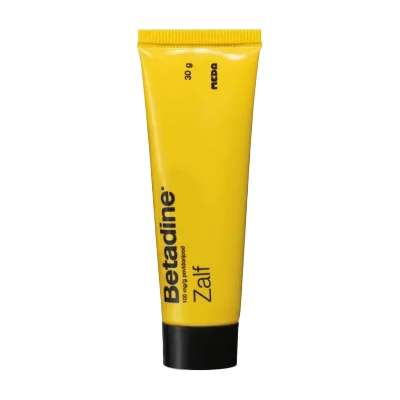
Betadine is a topical antiseptic ointment for minor cuts, abrasions, and superficial burns. It is intended for people who need local cleansing and protection of a small skin injury. The ointment forms a covering layer that helps keep the affected area clean while it recovers.
Betadine is a topical antiseptic ointment for superficial skin injuries and wound care. It is intended for people who need local cleansing and protection of minor cuts, abrasions, or burns. The ointment forms a covering layer that helps keep the affected area clean while it recovers.
Betadine is supplied as an ointment in a tube. Its intended role is local skin care for minor wounds, superficial burns, abrasions, and areas where contamination may increase the risk of infection.
Betadine is supplied as an ointment in a 30 g tube. The exact composition and any active ingredient details are not provided here, so the pack should be checked for the full composition.
Iodine-containing antiseptics reduce microorganisms on the skin surface, supporting local wound hygiene after gentle cleaning. Their action does not remove dead tissue, repair damaged skin, or guarantee that an infection will not develop.
Betadine may be used for local antiseptic care of minor cuts, abrasions, superficial burns, and other small skin injuries where contamination may increase the risk of infection. The affected area should be gently cleaned before applying a thin layer of ointment.
For a superficial burn, cool running water is preferred for initial cooling. Extensive burns and injuries involving a large area require medical assessment. Do not pack the ointment into a deep wound; gaping wounds, exposed tissue, or persistent bleeding require medical assessment.
Topical care should match the wound. Betadine ointment may suit a small superficial injury, while a deep wound, infected lesion, or extensive burn needs a different clinical plan.
A sterile dressing can protect a clean wound from friction without adding an antiseptic. A water-based cleansing approach can remove debris without leaving an oily coating. A prescribed antimicrobial treatment may be required when a clinician identifies a bacterial infection that needs more than surface care.
These options are not interchangeable. The depth, size, location, cause, and appearance of the wound determine the appropriate treatment.
| Approach | Main role | Practical limitation |
|---|---|---|
| Betadine ointment | Local antiseptic care for superficial skin injuries | Not suitable for deep, extensive, or severely infected wounds |
| Aqueous cleansing | Removal of dirt and surface debris | Does not provide a lasting protective ointment layer |
| Plain protective dressing | Reduces friction and contamination | Does not provide antiseptic activity |
People receiving lithium therapy should mention this before repeated iodine-containing topical treatment because iodine exposure can affect thyroid activity. Patients scheduled for thyroid testing should also mention recent use of iodine-containing products, as iodine exposure may influence some investigations.
Betadine is not suitable for everyone. Avoid using it without specific medical direction if you have had a strong reaction to iodine-containing antiseptics, have thyroid or significant kidney disease, or need to treat a large or deeply damaged area.
Ask a clinician before use if you are pregnant or breastfeeding, are treating a newborn or very young infant, take lithium or medicines affecting thyroid function, or need thyroid testing. Do not use it near the eyes, inside body cavities, or in a deep wound without medical advice.
A physician should assess wounds involving the hands, feet, face, joints, genitals, or deep tissue. Diabetes, poor circulation, reduced sensation, and immune suppression also increase the chance that a minor wound will become clinically significant.
Local irritation is possible. Some people may develop redness, itching, dryness, burning, or a rash after topical application. A spreading rash, facial swelling, breathing difficulty, or blistering requires immediate discontinuation and urgent medical attention because these symptoms may indicate a serious allergic reaction.
Repeated use can irritate already fragile skin. Ointments can also stain skin, fabrics, or dressings. Staining does not by itself indicate a harmful reaction, though new pain, swelling, or marked redness should not be ignored.
Occlusion can increase absorption and may intensify irritation. It can also leave the skin overly moist, which may slow the recovery of some superficial lesions.
In clinical practice, physicians usually judge a topical antiseptic by the wound rather than by the product name alone. A small, clean abrasion is managed differently from a puncture wound, pressure ulcer, infected eczema lesion, or burn.
Doctors also look for the direction of change. Less tenderness, reduced redness, and gradual surface healing are reassuring signs. Increasing pain, warmth, swelling, discharge, fever, or a red line moving up a limb suggests that the wound needs assessment.
The common mistake is continuing topical treatment while an infection progresses underneath. Betadine can support surface care, but it cannot drain an abscess, close separated wound edges, or replace antibiotics when a bacterial infection requires them.
Clinicians may also recommend avoiding routine antiseptic use on healthy skin. Frequent unnecessary application can dry or irritate the skin barrier. For a small wound, gentle cleaning and a suitable dressing may be sufficient after the initial care.
Betadine may be used for local care of a superficial cut after visible dirt has been removed and bleeding has stopped. The wound should be observed for increasing pain, swelling, warmth, pus, or spreading redness. WHO wound-care principles support cleaning and protection, while deeper or contaminated injuries need clinical assessment. The same approach remains relevant in 2026.
Betadine may have a role in limited superficial skin care, but extensive, deep, blistering, chemical, electrical, or facial burns require medical assessment. Cool running water is used for initial cooling, and ice should be avoided because it can worsen tissue injury. WHO first-aid guidance supports prompt cooling and appropriate referral for serious burns. The wound’s depth matters more than its surface appearance. This WHO advice remains relevant in 2026.
Repeated or extensive use of iodine-containing topical antiseptics can increase iodine exposure. The EMA recognises thyroid-related precautions for iodine-containing preparations, especially when absorption may be increased through damaged skin. People with thyroid disease should obtain product-specific medical direction before repeated application. A clinician may also consider recent iodine exposure when interpreting thyroid tests. These EMA precautions remain relevant in 2026.
Pregnancy and breastfeeding require a careful assessment of the treated area, frequency, and duration. A small, short-term application may be considered differently from repeated use over damaged or extensive skin. A physician or maternity-care professional should select the approach when regular treatment is needed. WHO maternal-care principles support limiting unnecessary exposure while treating the actual wound problem. These WHO principles remain relevant in 2026.
Use a thin film sufficient to cover the affected superficial area. There is no benefit in creating a thick mound of ointment, and excessive application can increase mess, irritation, and absorption. The required amount depends on the size and location of the wound. MOHAP pharmacovigilance principles support following the product-specific directions and reporting significant reactions. FDA product labeling should also be checked in 2026.
Arrange medical assessment when bleeding does not stop, the wound is deep or gaping, a foreign object remains, or the injury resulted from a bite or puncture. Prompt review is also needed for fever, pus, worsening pain, expanding redness, red streaks, or reduced movement. WHO and NICE wound-care guidance treat these features as reasons to escalate care. NICE guidance also supports escalation in 2026. People with diabetes or poor circulation should seek assessment earlier.
Your order will be securely packed and shipped within 24 hours. This is exactly what your package will look like (images of an actual item sent). It has the size and look of a regular private letter (24x11x0.7 cm) and its contents cannot be seen.
I used it on a shallow kitchen cut after washing it. The ointment stayed in place under a small dressing, and the cut looked calmer over the next few days.
The ointment was easy to spread on a scraped knee after a fall. I applied too much at first, which made the dressing messy, so using a thinner layer worked better.
I developed itching and a red patch around the treated area after several applications. I stopped using it, and a clinician advised me to avoid iodine-containing antiseptics.
I had a slow-healing foot wound and expected an ointment to solve it. The wound needed medical review because diabetes and reduced circulation were affecting healing.