Verified
The solution reduced the irritation around the treated area after the first few uses. I noticed dryness by the second week, so the clinician changed the schedule rather than asking me to apply more often.
29 Oct 2026

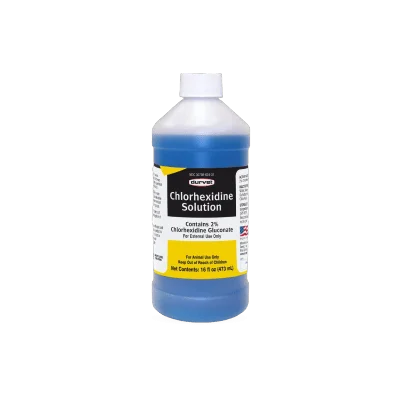
Chlorhexidine is a 2% external antiseptic solution for use on specified skin sites. It is intended for people who need controlled local disinfection under a clinical protocol. Its positive charge binds to microbial cell membranes, damaging them and reducing viable microorganisms.
Chlorhexidine is a 2% chlorhexidine gluconate antiseptic solution supplied in a bottle for external use. It is intended for controlled disinfection of skin or other clinically specified external sites. It belongs to the bisbiguanide antiseptic class.
Chlorhexidine contains chlorhexidine gluconate at a concentration of 2%. It belongs to the bisbiguanide antiseptic class. The solution is marked for external use only, so it should not be swallowed, used as a mouthwash, or applied to the eyes, ears, or deep wounds unless a qualified clinician has specifically directed that use.
Chlorhexidine is a cationic compound. Its positive charge is attracted to negatively charged components on bacterial cell surfaces. This interaction changes membrane permeability, causes leakage of intracellular material, and can lead to microbial death at sufficient concentrations. The antimicrobial effect is directed against many Gram-positive and Gram-negative bacteria, with variable activity against fungi, viruses, and bacterial spores.
Chlorhexidine is supplied as a liquid in a bottle. The 2% concentration is a clinical-strength preparation and requires careful attention to the intended application site.
Use involves several practical principles:
The product’s bottle form supports measured handling, yet the exact amount and contact time depend on the clinical purpose. A dental rinse, surgical skin preparation, wound cleanser, and instrument disinfectant are different applications and must not be treated as interchangeable.
The first stage of chlorhexidine activity is adsorption to the microbial surface. At lower exposure levels, this can interfere with membrane function and reduce the ability of microorganisms to maintain their internal balance. At higher exposure levels, membrane disruption becomes more pronounced and cellular contents leak out.
Chlorhexidine also binds to skin proteins and other surfaces. This property is called substantivity. It allows some antiseptic activity to remain after the initial application, although the duration varies with the concentration, contact time, skin condition, organic material, and whether the area is rinsed or wiped. A fixed six-hour protection period should not be assumed for every 2% solution or every clinical setting. The treating protocol should determine the expected duration.
The solution works locally. It does not replace wound assessment, surgical cleaning, treatment of an established infection, or systemic antimicrobial therapy when those measures are clinically required. Its role is reduction of surface microorganisms.
Chlorhexidine has limitations. Organic material such as blood, pus, or heavy debris can reduce antiseptic performance, and the solution does not dissolve tissue or remove dirt by itself. Cleaning and antiseptic application are separate steps.
The WHO guidelines on hand hygiene describe chlorhexidine as a persistent antiseptic option, while also stressing correct technique and awareness of skin reactions [1].
A 2% chlorhexidine solution may be used in controlled external antisepsis when the intended site and procedure are suitable for chlorhexidine. Clinical uses can include preparation of intact skin before selected procedures, cleansing around certain medical devices, or other healthcare applications defined by local protocols.
The appropriate application depends on the site, the procedure, the presence of visible contamination, and the condition of the skin. External antisepsis is not the same as treating an infected wound. Increasing the amount or repeating applications without a defined clinical reason does not necessarily improve the result.
| Antiseptic category | Main characteristic | Key limitation |
|---|---|---|
| Chlorhexidine | Membrane-active antiseptic with surface binding and residual activity | Can irritate skin and seriously injure eyes or sensitive tissues |
| Iodine-based antiseptics | Broad antimicrobial action with rapid activity | May irritate skin and can be unsuitable for some thyroid-related or iodine-sensitive situations |
| Alcohol-based antiseptics | Rapid action and quick evaporation on intact skin | Limited persistence and unsuitable for open wounds, mucous membranes, or some damaged skin |
Chlorhexidine is not a tissue-dissolving agent. Sodium hypochlorite, used in specialist endodontic procedures, has tissue-dissolving properties and a different safety profile; it is not an alternative route for using this external 2% solution.
A clinician chooses the antiseptic according to the anatomical site, required contact time, patient factors, fire risk, tissue compatibility, and procedure. The same antiseptic should not be transferred from one clinical purpose to another simply because the active ingredient has a familiar name.
Use is inappropriate in the following situations unless a clinician has selected and supervised it:
Chlorhexidine may interact physically with anionic substances, soaps, and some detergents. Residues from cleansing products can reduce antiseptic activity. Rinse or remove incompatible products when the clinical protocol requires it, then apply chlorhexidine to the prepared site.
The EMA has reviewed chlorhexidine hypersensitivity and reinforced the need for clear warnings about serious allergic reactions and accidental exposure to sensitive tissues [2].
Chlorhexidine is not suitable for you if you have previously experienced an allergic reaction to chlorhexidine or a known component of the solution. It also requires special caution when the intended site is close to the eyes, ears, mouth, brain, spinal canal, genital mucosa, or deep tissue.
Most problems with topical chlorhexidine involve local irritation or hypersensitivity. Possible reactions include redness, burning, itching, dryness, rash, contact dermatitis, and worsening irritation at the treated site. A small amount of solution can cause significant eye injury because ocular tissue is highly sensitive to chlorhexidine.
Serious allergic reactions are uncommon but can occur. Warning signs include facial swelling, swelling of the lips or tongue, breathing difficulty, widespread hives, dizziness, or collapse. Application should stop and urgent medical care is required if these symptoms develop.
Chlorhexidine can stain some materials and may damage certain soft contact lenses. It can also irritate damaged skin more than intact skin. Repeated exposure may increase dryness, especially in people with eczema, occupational dermatitis, or a history of reactions to antiseptics.
One practical detail is easy to miss: a small amount left under a patient, dressing, electrode, or occlusive pad can remain in prolonged contact with the skin. That increases irritation risk even when the initial application seemed comfortable.
Several mistakes can reduce benefit or increase harm:
One frequent error is confusing antisepsis with treatment. Chlorhexidine can reduce microorganisms on a surface, but it cannot diagnose the cause of redness, pain, swelling, pus, fever, or delayed wound healing.
Another mistake is using chlorhexidine near the eye during facial preparation. Even a short splash can cause severe ocular irritation and requires immediate water irrigation.
In clinical practice, doctors and nurses treat chlorhexidine as a local antiseptic rather than as a complete infection treatment. The expected benefit is a reduction in surface contamination at the treated site. It does not remove dead tissue, drain an abscess, close a wound, or replace antibiotics when a bacterial infection has entered deeper tissue.
A clinician also considers the skin barrier. Intact skin usually tolerates antisepsis better than excoriated, burned, or eczematous skin. Repeated use may be reasonable in a protocol, but repeated unsupervised application can produce irritation that resembles infection.
Doctors also ask about prior reactions to antiseptics, dressings, surgical preparations, and disinfectant products. This history can identify people who need a different approach before exposure occurs.
No. This product is marked for external use and contains 2% chlorhexidine gluconate. Oral rinses use different formulations, instructions, and concentration controls. FDA safety information from 2017 on chlorhexidine-containing products describes the possibility of serious allergic reactions and does not support using an external solution as a mouthwash [3].
The answer depends on the wound depth, tissue condition, and clinical protocol. A 2% external solution should not be poured into deep wounds, body cavities, or exposed internal tissue. The WHO's 2009 guidance and national clinical protocols distinguish surface antisepsis from wound irrigation, so the intended site must be specified before use .
No antiseptic has identical activity against every organism. Chlorhexidine has useful activity against many vegetative bacteria and some fungi and viruses, while spores are more resistant. The EMA's 2016 assessment of chlorhexidine products also highlights concentration, exposure, and tissue safety as factors that influence clinical performance .
Yes. Local rash, itching, burning, and dermatitis can occur, while severe allergy is rare but medically urgent. The FDA's 2017 drug-safety communication described anaphylaxis after chlorhexidine exposure, including exposure through topical products and medical procedures . Stop exposure and seek urgent help for breathing difficulty, facial swelling, or collapse.
The required contact time depends on the clinical purpose and the procedure using it. A universal time cannot be assigned safely to every external application. The WHO's 2009 infection-prevention guidance emphasizes following the validated procedure for the selected antiseptic rather than wiping it away immediately or extending exposure without a reason .
Soap and other anionic substances may reduce chlorhexidine activity when residues remain on the skin. The treating protocol should specify whether cleansing occurs first and whether rinsing is required. The EMA's 2016 safety material on chlorhexidine products recognizes incompatibility with some substances and reinforces careful preparation of the application site .
Flush the eye immediately with plenty of clean water and obtain urgent medical assessment, especially if pain, blurred vision, redness, or light sensitivity continues. Do not delay irrigation while trying to neutralize the solution with another chemical. FDA safety information from 2017 identifies accidental ocular exposure as a serious risk with chlorhexidine products .
Your order will be securely packed and shipped within 24 hours. This is exactly what your package will look like (images of an actual item sent). It has the size and look of a regular private letter (24x11x0.7 cm) and its contents cannot be seen.
The solution reduced the irritation around the treated area after the first few uses. I noticed dryness by the second week, so the clinician changed the schedule rather than asking me to apply more often.
The liquid was easy to apply, but the smell and temporary stinging were unpleasant. The skin settled after it dried, and I did not have a rash.
The antiseptic was useful for the first few days. I stopped when the area became itchy and contacted the clinic. The irritation improved after chlorhexidine was discontinued.
A small splash reached my eye during application. I rinsed it immediately for several minutes and obtained urgent assessment. The burning resolved, but I would use much more protection around the face next time.