Verified
I took the first tablets early in a flare and the joint settled over the next day. I had loose stools that evening, so I did not repeat the dose.
2 Nov 2026

Colchicine is an oral anti-inflammatory medicine containing colchicine as its active ingredient. It is intended for adults who need treatment for acute gout flares, gout-flare prevention, or familial Mediterranean fever. The medicine limits neutrophil activity around uric-acid crystals to reduce inflammation.
Colchicine is an oral anti-inflammatory medicine used for acute gout flares, gout-flare prevention, and familial Mediterranean fever. It is intended for adults whose treatment plan requires colchicine 500 microgram tablets. Colchicine belongs to the anti-inflammatory medicines used for crystal-induced arthritis and selected hereditary inflammatory disorders.
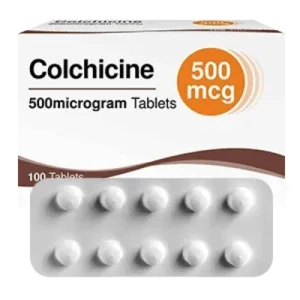
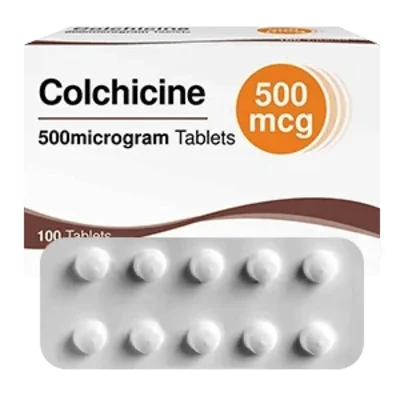
Colchicine contains colchicine as its active ingredient. The product is supplied as oral tablets containing 500 micrograms per tablet, with 100 tablets in the pack. Colchicine belongs to the anti-inflammatory medicines used for crystal-induced arthritis and selected hereditary inflammatory disorders.
The medicine acts on inflammatory cells rather than functioning as a conventional painkiller. It does not dissolve uric-acid crystals and does not replace long-term urate-lowering treatment when that treatment is indicated.
Colchicine has a narrow therapeutic range. The difference between an appropriate dose and a toxic dose can become clinically significant when kidney or liver function is reduced, or when interacting medicines slow colchicine clearance.
The appropriate regimen depends on whether colchicine is being used for an acute flare, prevention, or familial Mediterranean fever. The 500 microgram tablet strength requires careful calculation because many adult regimens are expressed in milligrams.
Typical adult regimens described in regulatory prescribing information include:
These regimens are clinical reference points, not permission to adjust treatment independently. A 500 microgram tablet may not match every prescribed dose without a specific tablet schedule. The FDA prescribing information sets limits for acute gout treatment and warns that repeated courses at short intervals increase the risk of accumulation and toxicity [2].
The timing of the first dose matters. Colchicine generally works better when started early in a flare, before inflammation becomes extensive.
Swallow the tablet with water. Do not compensate for vomiting or diarrhoea by taking additional tablets. Persistent vomiting, severe diarrhoea, or increasing weakness after colchicine requires urgent medical assessment because gastrointestinal symptoms can be early signs of excessive exposure.
During a gout flare, neutrophils move toward the joint and release inflammatory signals. Colchicine interferes with microtubule activity inside these cells, limiting their movement and activation. The result is less swelling, tenderness, and inflammatory pain after treatment begins.
Colchicine does not lower serum uric acid.
Colchicine is used for several specific inflammatory conditions:
A patient may still need a separate urate-lowering strategy, dietary management, and follow-up testing when recurrent gout is present. The NHS and NICE describe colchicine as an option for gout-flare treatment and prevention, with dosing adjusted for patient-specific risk factors [1].
Colchicine is selected for its effect on neutrophil-driven inflammation. Other approaches target different pathways and have different restrictions.
| Treatment approach | Main action and typical role |
|---|---|
| Colchicine | Limits neutrophil activation; used for acute gout flares and prevention |
| Non-steroidal anti-inflammatory medicine | Suppresses cyclo-oxygenase pathways; used for inflammatory pain when kidney, stomach, heart, and bleeding risks permit |
| Corticosteroid treatment | Broadly suppresses inflammation; used when other options are unsuitable or when a rapid anti-inflammatory effect is needed |
Colchicine may be useful when a non-steroidal anti-inflammatory medicine is unsuitable because of ulcer history, anticoagulant use, or selected cardiovascular risks. It can be a poor choice when kidney function is severely reduced or when a strong CYP3A4 or P-glycoprotein inhibitor is being taken.
The main advantage is its targeted effect on crystal-triggered inflammation. The main limitation is toxicity risk from excess exposure. Colchicine also does not reduce uric acid, so it does not address the underlying crystal burden by itself.
Colchicine may not be appropriate if your kidneys or liver are severely impaired, if you take medicines that strongly affect colchicine levels, or if you already have symptoms suggesting toxicity. Extra care is needed with chronic kidney disease, liver problems, frailty, low body weight, older age, statin treatment, pregnancy, and breastfeeding.
Gastrointestinal effects are the most familiar adverse reactions. Diarrhoea, nausea, abdominal pain, and vomiting may occur, especially when the dose is too high or the patient is sensitive to the medicine. The FDA label identifies diarrhoea and gastrointestinal upset as common dose-limiting reactions .
Other possible adverse effects include:
Diarrhoea is not a signal to take another tablet. It can be an early warning of excessive colchicine exposure, especially when accompanied by vomiting, marked weakness, muscle pain, or reduced urine output.
Serious toxicity may cause bone-marrow suppression, leading to unusual bruising, bleeding, fever, mouth ulcers, or recurrent infection. Myopathy and rhabdomyolysis may present with muscle pain, weakness, or dark urine. These symptoms need urgent assessment.
Kidney impairment increases the risk because colchicine clearance falls. Liver impairment can also raise exposure. Older adults and people taking several medicines may need closer monitoring because interaction risks are more difficult to recognise.
Colchicine is metabolised mainly through CYP3A4 and transported by P-glycoprotein. Medicines that strongly inhibit either pathway can raise colchicine concentrations and produce toxicity.
Important interacting medicines include:
Codeine does not share the principal CYP3A4 and P-glycoprotein interaction pattern that creates the highest colchicine risk. It can still cause constipation, nausea, drowsiness, and reduced alertness, which may complicate recognition of gastrointestinal adverse effects. Codeine-containing treatment should follow its own prescribing restrictions and should not be used to mask worsening joint symptoms.
The EMA safety information for colchicine highlights fatal toxicity after excessive dosing and the need to consider renal function, hepatic function, and interacting medicines before treatment [3].
Do not combine colchicine with grapefruit or grapefruit juice without specific medical direction, because grapefruit products may affect CYP3A4 activity. Alcohol does not create the main pharmacokinetic interaction, but heavy alcohol intake can worsen dehydration and complicate assessment of a painful gout flare.
Several practical mistakes can reduce benefit or increase risk:
One detail patients often miss is that colchicine toxicity may begin with ordinary-looking diarrhoea before more serious blood, nerve, or muscle complications appear. Another is that a medication interaction can arise several days after colchicine has been tolerated well, when a new antibiotic or antifungal is added.
In clinical practice, physicians often describe colchicine as a timing-sensitive medicine with little margin for casual dose escalation. Starting early during a gout flare can help, while taking more tablets after symptoms persist can increase harm without reliably improving the outcome.
A physician also looks beyond the joint. Kidney function, liver tests, blood counts, statin use, antibiotics, antifungals, transplant medicines, and the patient’s recent colchicine exposure all influence the treatment plan.
Patients sometimes expect colchicine to work like an immediate analgesic. Its role is to reduce the inflammatory process triggered by crystals, so the response may not feel instant. Recurrent flares also indicate the need to review urate management rather than relying on repeated rescue courses.
Colchicine is most useful when started at the first sign of an acute gout flare. Symptom improvement may develop during the first day, although swelling and tenderness can take longer to settle. NHS guidance published in 2024 describes early treatment as an important part of gout-flare management .
Colchicine controls inflammation during a gout flare but does not remove uric-acid crystals or lower serum urate. Recurrent attacks may require a separate long-term urate-lowering plan. NICE guidance from 2022 separates flare treatment from long-term gout management [4].
Daily colchicine is used in some patients for flare prevention or familial Mediterranean fever. The dose and duration depend on kidney function, liver function, age, interacting medicines, and the treatment goal. The FDA prescribing information updated in 2022 sets specific dosing limits and warnings for repeated use .
Diarrhoea is a recognised adverse effect and may occur when exposure is excessive. Severe or persistent diarrhoea, vomiting, weakness, muscle pain, or reduced urine output can indicate toxicity rather than a minor nuisance. EMA safety information from 2023 emphasises that gastrointestinal symptoms may precede serious colchicine toxicity .
Colchicine is not usually described as a direct kidney toxin, but reduced kidney function can cause the medicine to accumulate. Accumulation raises the risk of gastrointestinal, muscle, nerve, and blood-related toxicity. WHO pharmacovigilance principles published in 2023 support dose adjustment and interaction review when drug clearance is impaired [5].
Colchicine is an established treatment for familial Mediterranean fever and may reduce attacks and the risk of amyloid complications. Long-term treatment requires a structured regimen and monitoring for muscle, nerve, blood, and gastrointestinal effects. The EMA public information for colchicine published in 2023 supports specialist-guided use for this inherited inflammatory condition .
Your order will be securely packed and shipped within 24 hours. This is exactly what your package will look like (images of an actual item sent). It has the size and look of a regular private letter (24x11x0.7 cm) and its contents cannot be seen.
I took the first tablets early in a flare and the joint settled over the next day. I had loose stools that evening, so I did not repeat the dose.
Colchicine helped during attacks, but it did not prevent every flare. My treatment plan later included urate management rather than relying on rescue tablets.
The medicine caused nausea and weakness when I started an antibiotic. The combination was reviewed, and I stopped taking extra doses.
The first dose was taken early, and the pain became easier to manage. I still needed several days before the joint felt normal.