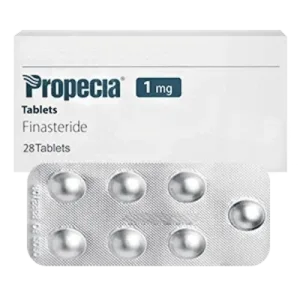
Description
Finasteride is an oral prescription medicine used for male pattern hair loss and benign prostatic hyperplasia. It is intended mainly for adult men with androgenetic alopecia or an enlarged prostate. Finasteride belongs to the 5-alpha reductase inhibitor class.
Composition
Finasteride is an oral prescription medicine supplied as pills. It belongs to the 5-alpha reductase inhibitor class and is used for male pattern hair loss or benign prostatic hyperplasia. The prescribed strength depends on the condition being treated; exact product details are stated on the pack and by the prescriber.
Dosage and usage
The available product is supplied as pills. The exact strength and prescribed schedule should correspond to the indication recorded by the prescriber. Finasteride for male pattern hair loss is prescribed differently from finasteride used for an enlarged prostate.
Typical administration principles include:
- Take the prescribed pill once daily unless the prescriber gives another schedule.
- Swallow it with water.
- It may be taken with or without food.
- Take a missed dose when remembered if the next dose is not due soon.
- Skip a missed dose if the next scheduled dose is close; do not double the next intake.
- Continue treatment regularly because interrupted use can reduce the benefit over time.
- Do not crush or split a tablet unless a pharmacist or prescriber has confirmed that the specific tablet can be altered.
Finasteride is absorbed after oral administration and undergoes hepatic metabolism. The medicine is not an instant hair-growth treatment. Assessing hair response usually requires several months of consistent use, while prostate symptom improvement may also take time.
A useful practical distinction is this: reduced shedding can be an early sign of response, but photographs taken under similar lighting are more reliable than daily mirror checks. Hair naturally varies with styling, washing, and humidity.
Take baseline photographs before treatment from the front, temples, and crown. Repeat them every few months in similar lighting rather than judging progress from day-to-day shedding.
Finasteride can lower serum prostate-specific antigen, or PSA, in men using it for BPH. A doctor interpreting a PSA result needs to know that finasteride is being taken, because the result may require clinical adjustment.
How it works
Finasteride competitively inhibits the type II 5-alpha reductase enzyme. This enzyme converts testosterone into dihydrotestosterone, also called DHT. DHT is a more potent androgen in tissues such as the scalp and prostate.
Lower DHT reduces stimulation of susceptible hair follicles. In male pattern hair loss, this may slow miniaturisation and extend the period during which follicles produce visible hair. In prostate tissue, lower DHT can reduce glandular growth.
The medicine acts on hormone conversion rather than directly stimulating follicles. The US Food and Drug Administration describes finasteride as a selective inhibitor of steroid 5-alpha reductase. The same pharmacological principle explains its use in both androgenetic alopecia and BPH [1].
DHT is not the same as testosterone. Finasteride does not remove testosterone from the body; it reduces conversion of testosterone into DHT in tissues where type II 5-alpha reductase is active.
Indications
Finasteride belongs to the 5-alpha reductase inhibitor class. It is supplied as pills and has two established medical roles: treatment of male pattern hair loss and management of benign prostatic hyperplasia, commonly called BPH.
The appropriate strength depends on the condition being treated. Hair loss and prostate symptoms require different prescribing decisions, so a tablet intended for one indication should not be substituted for another without medical direction.
Indications for Male Pattern Hair Loss
Androgenetic alopecia is a hormone-sensitive form of progressive hair thinning. It commonly affects the temples, frontal hairline, and crown. Finasteride lowers the hormonal signal responsible for gradual follicle miniaturisation, helping preserve existing hair and supporting thicker growth in some men.
Treatment is intended for adult men. Results develop slowly because hair follicles move through growth and resting cycles. A reduction in shedding may appear before visible density improves.
Indications for Benign Prostatic Hyperplasia
Benign prostatic hyperplasia causes enlargement of the prostate. The enlarged gland can narrow the urinary passage and contribute to a weak stream, hesitancy, frequent urination, or incomplete bladder emptying.
Finasteride reduces DHT activity within prostate tissue. Over time, this can reduce prostate volume and improve lower urinary tract symptoms. It is not designed to provide immediate relief during acute urinary retention.
A urinary blockage requires urgent medical assessment.
Comparison
Finasteride and minoxidil work through different biological pathways. Dutasteride also inhibits 5-alpha reductase, though it has broader enzyme inhibition and may be selected only after careful clinical assessment.
Minoxidil does not lower DHT. It acts directly on hair follicles and may help prolong the growth phase. It can cause scalp irritation when applied topically, while oral use requires medical supervision because of possible cardiovascular effects.
Dutasteride inhibits both type I and type II 5-alpha reductase. Its broader action may increase DHT suppression, but that does not make it an automatic first choice. The longer elimination period and different safety considerations require a prescriber-led decision.
Finasteride may be selected when hormonal control is the main treatment goal. Minoxidil may be useful when a non-hormonal follicular approach is preferred. Some dermatologists use both mechanisms in selected patients, balancing potential benefit against tolerability.
Contraindications
Finasteride is not suitable for everyone. The medication is not for you if:
- You have had an allergic reaction to finasteride or any tablet ingredient.
- You are a child or adolescent.
- You are taking a different finasteride regimen for another indication without prescriber direction.
- You have unexplained breast changes that have not been medically assessed.
When this is not for you
You are a woman who is pregnant or may become pregnant and could handle crushed or broken tablets. Pregnant women must not handle crushed or broken finasteride pills because the active ingredient can interfere with development of male external genitalia. Intact tablets have a protective coating, but anyone who is pregnant should avoid handling damaged tablets.
Finasteride is not indicated for women with female pattern hair loss. It also does not treat sudden patchy hair loss, scarring alopecia, or hair loss caused by nutritional deficiency without addressing the underlying diagnosis.
Tell the prescriber about:
- Liver disease.
- Previous depression or suicidal thoughts.
- Fertility concerns.
- Breast lumps or nipple discharge.
- All prescribed medicines and supplements.
- Planned PSA testing.
Side effects
Finasteride is tolerated by many patients, but unwanted effects can occur. The side effects most relevant to men using it for hair loss involve sexual function.
Reported reactions include:
- Reduced libido.
- Erectile dysfunction.
- Reduced ejaculate volume.
- Ejaculatory difficulty.
- Breast tenderness or breast enlargement.
- Skin rash or itching.
- Testicular discomfort.
- Depressed mood or mood changes.
Clinical trials of the lower hair-loss regimen reported sexual adverse reactions in a small minority of participants, with rates varying between studies and treatment groups. The FDA prescribing information records decreased libido, erectile dysfunction, and ejaculation disorders among reported reactions [2].
Sexual symptoms often improve during continued treatment or after discontinuation, but persistent symptoms have also been reported. A new sexual symptom should be recorded with its timing, severity, and relationship to treatment rather than dismissed or assumed to be permanent.
Mood changes deserve attention. Contact a prescriber promptly if persistent sadness, loss of interest, marked anxiety, or thoughts of self-harm develop. Emergency help is needed for thoughts of suicide or immediate danger.
Breast tissue changes require medical assessment, especially if a lump, nipple discharge, or one-sided enlargement occurs. These symptoms are uncommon but should not be ignored.
If sexual symptoms appear, write down when they started and whether they changed after missed doses. That pattern gives the prescriber more useful information than a general statement that the medicine “felt different.”
Finasteride may rarely affect semen parameters. This matters for men being assessed for fertility. A semen analysis and medication review can help distinguish treatment effects from other causes of reduced fertility.
Common mistakes
Several practical mistakes can reduce benefit or make side effects harder to interpret:
- Stopping after a few weeks because hair growth is not immediately visible.
- Taking extra pills after missed doses.
- Using the prostate schedule for hair loss or the hair-loss schedule for prostate symptoms.
- Ignoring depressed mood or new sexual symptoms.
- Forgetting to mention finasteride before PSA testing.
- Sharing pills with a family member.
- Handling broken tablets during pregnancy.
- Starting finasteride after sudden hair loss without confirming the diagnosis.
- Taking several new hair products simultaneously and then being unable to identify the cause of irritation.
- Expecting finasteride to restore hair in areas where follicles are no longer active.
One overlooked detail is PSA interpretation. Finasteride can lower PSA, so a clinician must know about treatment before interpreting the result.
Another is the time scale. Hair cycles move slowly, and early shedding does not provide a reliable verdict on final response.
What doctors say
In clinical practice, doctors often set expectations around preservation before regrowth. Finasteride may stabilise hair loss without producing dramatic new coverage, especially when follicles have been miniaturised for many years.
A dermatologist usually assesses the pattern of thinning, family history, scalp examination, and the speed of progression. Sudden shedding, scalp inflammation, scarring, or loss of eyebrows suggests a different diagnostic pathway.
For prostate symptoms, doctors assess urinary flow, residual urine, infection symptoms, kidney function, and PSA when appropriate. Finasteride can reduce prostate-related obstruction, but it is not a substitute for evaluating blood in the urine, severe pain, fever, or acute inability to urinate.
The American Academy of Dermatology supports discussing established treatment options according to the pattern and cause of hair loss. The European Medicines Agency also recognises mood and sexual-function concerns as relevant counselling points for finasteride users [3].