Verified
The first month brought frequent hot flushes and poor sleep. Taking the tablet with breakfast helped the nausea, and the flushes became less disruptive after several weeks. I still needed help with sleep.
20 Oct 2026

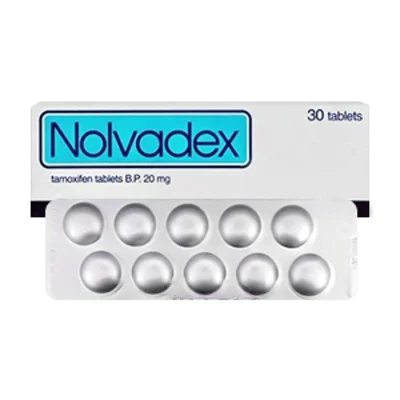
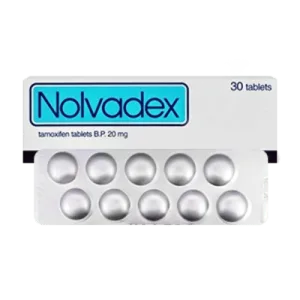
Nolvadex is a prescription tamoxifen tablet for adults with hormone-sensitive breast cancer. It helps reduce estrogen-driven stimulation by blocking estrogen signalling in breast tissue.
Nolvadex is a prescription tablet containing tamoxifen, a selective estrogen receptor modulator used mainly in hormone-sensitive breast cancer. It is intended for adults whose treatment requires blocking estrogen activity in breast tissue. Tamoxifen can inhibit estrogen signalling in breast tissue while producing different effects in bone and other tissues.
The active ingredient is tamoxifen. The dose is stated on the pack — follow the leaflet. Nolvadex is not an anabolic steroid and does not directly replace testosterone or estrogen.
The product described on this page is Nolvadex in tablet form, with tamoxifen tablets B.P. and a pack containing 30 tablets. It is taken by mouth. The tablet should be swallowed with water and should not be crushed unless a prescriber gives a specific instruction.
The dose is stated on the pack — follow the leaflet. Some clinical plans divide the total daily amount, but the schedule must come from the prescriber. A higher or more frequent dose does not provide a reliable shortcut to better treatment.
Missed doses should not be doubled. If a dose is forgotten, the person should follow the missed-dose instructions supplied by the prescribing service; taking two tablets together can increase exposure without restoring the intended treatment pattern.
Tamoxifen may be taken with food or on an empty stomach. Nausea can be easier to manage when the tablet is taken with a light meal, provided this remains compatible with the prescribed routine.
Tamoxifen belongs to the selective estrogen receptor modulator (SERM) class and binds to estrogen receptors. In breast tissue, it blocks estrogen signalling and reduces estrogen-driven stimulation of hormone-sensitive breast cancer cells. Its effects are tissue-specific, producing different estrogen-related effects in breast tissue, bone, and other tissues.
Tamoxifen is used in estrogen receptor-positive or hormone receptor-positive breast cancer. It may be prescribed after surgery, radiotherapy, or chemotherapy as adjuvant endocrine treatment, or for advanced disease when estrogen signalling contributes to tumour growth. Treatment plans differ according to menopausal status, tumour biology, recurrence risk, and previous therapy.
Tamoxifen is also used to reduce the incidence of invasive breast cancer in adults with a high risk of developing the disease. This preventive use requires a careful assessment of expected benefit and the risks of thromboembolism and endometrial changes. The United States Food and Drug Administration recognises tamoxifen for treatment and risk reduction in defined clinical situations [1].
Tamoxifen does not treat every type of breast cancer. Its benefit depends on hormone receptor status and the complete oncology assessment. Pathology results, including estrogen receptor and progesterone receptor findings, guide the choice of endocrine treatment.
A course may last several years. The prescribed duration depends on the indication and response. Stopping early can reduce the protective effect of adjuvant endocrine therapy, while continuing without medical review can expose a person to avoidable risks.
Nolvadex differs from other endocrine medicines by acting mainly at the estrogen receptor. The most suitable option depends on the diagnosis, menopausal status, treatment history, recurrence risk, and adverse-effect profile.
| Medicine or class | Main pharmacological action | Typical clinical role |
|---|---|---|
| Tamoxifen | Blocks estrogen signalling in breast tissue; has tissue-selective activity | Hormone-sensitive breast cancer and selected risk-reduction use |
| Clomiphene | SERM activity at hypothalamic and pituitary estrogen receptors | Selected fertility and ovulatory disorders; other use is specialist-directed |
| Anastrozole, exemestane, or letrozole | Aromatase inhibition lowers estrogen synthesis | Endocrine treatment in selected postmenopausal breast cancer settings |
Clomiphene and tamoxifen are both SERMs, but their approved indications and evidence bases differ. Clomiphene is associated mainly with ovulation induction, while tamoxifen has an established role in hormone-sensitive breast cancer.
Anastrozole is a non-steroidal aromatase inhibitor. Exemestane, marketed in some settings as Aromasin, is a steroidal aromatase inhibitor. Letrozole is another aromatase inhibitor. These medicines reduce the conversion of androgens into estrogen and can cause joint symptoms, bone-density loss, and changes in lipid or cardiovascular risk.
Nolvadex may be preferred in selected premenopausal breast cancer situations, while aromatase inhibitors are often used in postmenopausal treatment plans. The choice is not based on a single side-effect comparison. NICE guidance recommends matching endocrine therapy to menopausal status and the clinical characteristics of the cancer [2].
Nolvadex is not suitable for everyone. It should not be used during pregnancy because anti-estrogenic activity can harm fetal development. It is also unsuitable for people with a previous serious hypersensitivity reaction to tamoxifen or one of its ingredients.
The medicine requires careful assessment in people with a history of deep-vein thrombosis, pulmonary embolism, stroke, clotting disorders, liver disease, cataracts, or unexplained vaginal bleeding. Preventive use in people at high breast cancer risk requires a separate balance of benefits and risks.
Warfarin and tamoxifen can interact. Tamoxifen may increase anticoagulant effects, so clotting tests and dose adjustment may be needed. The combination must be managed by the prescribing team rather than adjusted independently.
Anastrozole should not be combined routinely with tamoxifen for breast cancer treatment. Clinical trials have not shown a benefit from giving the two together in the usual adjuvant setting, and treatment sequencing requires a specific oncology plan.
Strong CYP2D6 inhibitors, including some antidepressants, may reduce active endoxifen exposure. Paroxetine, fluoxetine, and bupropion deserve specific review before tamoxifen is started. Do not stop an antidepressant suddenly; the prescribing clinician can select an appropriate alternative or monitoring plan.
Nolvadex is NOT for you if your clinician identifies pregnancy, serious hypersensitivity, or an unsafe interaction. A history of thrombosis, relevant drug interactions, pregnancy, or concerning vaginal symptoms may change the treatment plan.
Tamoxifen can cause estrogen-related and treatment-related adverse effects. The most frequently reported problems include hot flushes, night sweats, nausea, fatigue, fluid retention, vaginal discharge, menstrual changes, and muscle cramps. Some people experience these effects during the first weeks, while others develop them later.
Blurred vision, difficulty seeing colours, cataracts, or other visual changes require prompt assessment. Tamoxifen has been associated with ocular effects, especially during longer treatment periods. Do not continue to ignore a new visual symptom.
Serious but less common reactions include venous thromboembolism, pulmonary embolism, stroke, liver injury, and endometrial abnormalities. Symptoms such as one-sided leg swelling, sudden chest pain, unexplained breathlessness, coughing blood, facial weakness, or sudden speech difficulty require urgent medical attention.
A practical detail can be missed: tamoxifen-related hot flushes may become more troublesome in warm environments, during alcohol use, or after spicy meals. Keeping a symptom record can help separate treatment effects from unrelated symptoms.
Several avoidable errors can reduce treatment quality:
One overlooked issue is dental and surgical planning. The clinician managing tamoxifen should know about upcoming surgery, prolonged immobility, or hospital admission because clotting risk may need reassessment.
In clinical practice, oncologists usually present tamoxifen as a long-term endocrine treatment rather than a rapid symptom-relief medicine. Its purpose is to reduce estrogen-driven stimulation over time, so adherence matters even when the person feels well.
A doctor would also assess whether symptoms come from tamoxifen, menopause, chemotherapy, anaemia, depression, thyroid disease, or the cancer itself. Treating every new symptom as a drug reaction can delay diagnosis.
The benefit is strongest when the tumour is hormone receptor-positive and the treatment is matched to the person’s oncology profile.
Nolvadex is a product containing tamoxifen, a selective estrogen receptor modulator. The tablet described here contains tamoxifen tablets B.P. 20 mg. The FDA’s 2023 tamoxifen prescribing information identifies tamoxifen as the active medicine used in defined breast cancer treatment and risk-reduction settings [3].
Tamoxifen begins affecting estrogen receptors after treatment starts, but the clinical benefit in breast cancer is assessed over weeks, months, and longer follow-up rather than by immediate symptom change. The EMA’s 2022 product information describes endocrine treatment as part of sustained management for hormone-sensitive breast cancer. A lack of early symptoms does not show that the treatment is failing.
Tamoxifen is used for post-cycle therapy by some people, but this is outside its approved breast cancer indications. The FDA’s 2023 and EMA’s 2022 documents focus on oncology use, not anabolic-steroid recovery. Hormone testing and assessment of clotting, liver, and cardiovascular risks are needed before any off-label endocrine plan.
Warfarin and tamoxifen can interact, with possible effects on anticoagulation control. The FDA’s 2023 prescribing information lists anticoagulant interaction concerns and supports closer monitoring when the medicines are combined. A person should not alter warfarin or tamoxifen independently.
Tamoxifen does not have one predictable effect on fertility in every person. In oncology treatment, it can interrupt menstrual function and pregnancy must be avoided during therapy; in male endocrine use, it may alter pituitary signalling without guaranteeing restored sperm production. The WHO’s 2023 cancer-medicine information supports using tamoxifen for its established oncology role rather than assuming fertility benefits.
Tamoxifen should not be used during pregnancy because it can affect estrogen-dependent fetal development. The EMA’s 2022 product information treats pregnancy as a major safety concern and requires appropriate contraceptive planning during treatment. Pregnancy planning should be discussed before therapy begins, not after a positive test.
New blurred vision, reduced colour perception, flashes, or other visual changes should receive prompt medical assessment. Tamoxifen has recognised ocular risks, and the FDA’s 2023 product information describes the need to evaluate visual symptoms. Continuing the tablet without assessment may allow a treatable eye problem to progress.
Your order will be securely packed and shipped within 24 hours. This is exactly what your package will look like (images of an actual item sent). It has the size and look of a regular private letter (24x11x0.7 cm) and its contents cannot be seen.
The first month brought frequent hot flushes and poor sleep. Taking the tablet with breakfast helped the nausea, and the flushes became less disruptive after several weeks. I still needed help with sleep.
I had been worried about taking a daily hormone tablet after surgery. My main problem was fatigue, although blood tests also showed anaemia. Treating both issues made it easier to continue tamoxifen.
I used tamoxifen after an anabolic cycle without arranging blood tests first. My breast tenderness improved, but my testosterone remained low. The experience showed me that symptom improvement does not prove hormonal recovery.
The treatment was manageable until I developed blurred vision. The eye assessment found a problem that needed follow-up, so I stopped treating the symptom as ordinary tiredness.