




Verified
I took the capsules for the course prescribed for a bacterial infection. My symptoms began easing after several days, but I noticed mild stomach discomfort at the start.
8 Nov 2026
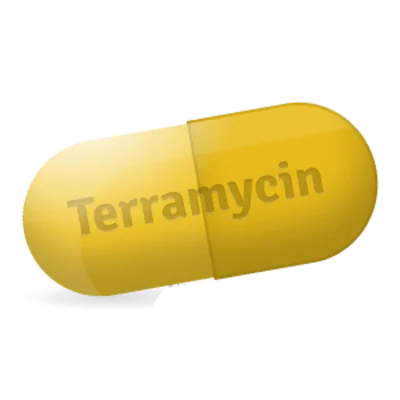
Terramycin is an oral antibacterial medicine supplied as capsules. It is intended for patients with susceptible bacterial infections selected for treatment by a clinician. After oral administration, it works throughout the body rather than only on the skin or eye surface.
Terramycin belongs to the antibiotic category. Antibiotics act against bacteria, while viral illnesses such as influenza and many common colds do not respond to antibacterial treatment. The capsule is swallowed with water.
Terramycin is an oral antibacterial medicine supplied as capsules for bacterial infections that are susceptible to its antibacterial action. It works throughout the body after the capsule is swallowed with water, and the prescribed use depends on the infection and the clinician’s treatment plan.
The capsule is swallowed with water. It should not be opened, crushed, or mixed into food unless a prescriber or pharmacist has specifically confirmed that this is suitable for the supplied formulation. Altering a capsule can affect how the medicine is released and may make the dose difficult to measure.
The exact dose depends on the capsule strength, infection being treated, patient factors, and prescriber instructions. Use the prescribed number of capsules at the prescribed intervals. Take each dose with water and follow any food-timing instruction supplied for the product.
Do not double the next dose after a missed capsule. Take the missed dose when remembered if the next scheduled dose is not due soon; if the next dose is close, skip the missed dose and continue with the regular schedule. Taking two doses together can increase adverse effects without improving antibacterial action.
Food, mineral supplements, antacids, and other medicines can affect the absorption of some oral antibiotics. Separate administration may be required for products containing minerals such as calcium, magnesium, iron, or zinc. The exact separation interval depends on the active substance and formulation, so the prescribed instructions should determine the schedule.
Oxytetracycline is a tetracycline antibiotic that acts against susceptible bacteria by inhibiting bacterial protein synthesis. This prevents susceptible bacteria from producing proteins needed for growth and reproduction.
Terramycin is used for bacterial infections that are susceptible to its antibacterial action. The infection site determines the treatment plan. Oral antibiotics may be considered for respiratory, skin, urinary, gastrointestinal, or other bacterial infections when clinical findings support their use.
Antibiotics do not treat every cause of redness, pain, discharge, cough, sore throat, or fever. Allergic inflammation, viral infections, fungal disease, and non-infectious irritation require different approaches.
A clinician may use examination findings, laboratory testing, culture results, or the patient’s recent antibiotic history when selecting treatment. The same symptom can arise from different causes, so the medicine used for one patient may be unsuitable for another.
Terramycin may be considered when a bacterial infection is suspected and the organism is expected to respond to the medicine. Treatment decisions can involve:
Complete the prescribed course unless the prescriber changes it. Stopping early can leave surviving bacteria behind and may contribute to treatment failure or antimicrobial resistance, a concern addressed by WHO antimicrobial stewardship guidance [1].
Antibacterial treatment is selected by infection site, likely organism, resistance risk, allergies, and patient-specific factors. A broader-spectrum option is not automatically a better option. Narrower treatment may be preferred when testing identifies a susceptible organism and a focused medicine is suitable.
| Treatment approach | Main role | Main limitation |
|---|---|---|
| Oral antibacterial capsules | Treat susceptible bacterial infections throughout the body | Can cause systemic adverse effects and may be unsuitable for some patients |
| Topical antibacterial treatment | Acts directly at a limited skin or surface site | May not reach deeper or widespread infection |
| Culture-guided antibiotic therapy | Targets a documented organism and susceptibility pattern | Requires appropriate sampling and laboratory processing |
Terramycin capsules should not be substituted for a topical formulation or used for an eye condition simply because the product name is similar. Route of administration changes the treatment effect and the safety considerations.
Terramycin is not suitable for every patient. The medicine should not be used when there is a known serious allergy to the active substance, related antibiotics, or an excipient in the supplied capsule.
Pregnancy, breastfeeding, childhood use, kidney disease, liver disease, and a history of severe antibiotic reactions require individual assessment. Some antibiotic classes can affect developing teeth or bones, so age and pregnancy status must be considered before treatment.
Potential interactions may involve antacids, mineral supplements, anticoagulants, retinoid medicines, and other prescription treatments. The prescriber should review the complete medicine list, including non-prescription products and herbal supplements, before selecting the regimen.
Digestive symptoms are among the reactions associated with oral antibiotic treatment. Nausea, abdominal discomfort, loose stools, and reduced appetite may occur. Mild symptoms can sometimes be managed by taking the medicine exactly as directed and maintaining fluid intake, provided no food restriction applies to the prescribed formulation.
Antibiotics can also alter normal intestinal bacteria. Persistent or severe diarrhoea, blood or mucus in the stool, abdominal cramping, or fever needs prompt medical assessment because antibiotic-associated colitis can occur during or after treatment.
Possible reactions include:
Stop taking the medicine and obtain urgent medical help for facial or throat swelling, breathing difficulty, widespread blistering, faintness, or rapidly spreading rash. These symptoms may indicate a severe hypersensitivity reaction.
Sun sensitivity can also matter with some antibiotic classes. Use protective clothing and limit intense sun exposure if the prescriber warns that the supplied medicine can increase photosensitivity.
Several routine errors can reduce treatment success or increase adverse effects:
A common mistake is judging treatment by the first day alone. Some infections improve gradually, while deterioration can be rapid; the correct response depends on the infection and the clinical plan.
In clinical practice, doctors judge an antibiotic by the infection it can treat, not by the number of symptoms it appears to cover. Fever, discharge, swelling, or pain can occur with bacterial and non-bacterial conditions, so symptoms alone do not establish the need for Terramycin.
A clinician will usually ask whether the patient has recently used an antibiotic. Recent treatment can increase the chance of resistant bacteria and may change the preferred medicine. The WHO AWaRe framework supports choosing antibiotics carefully and reserving broader treatment for situations where it is justified [2].
Doctors also look for a clear response. Worsening pain, persistent fever, new swelling, dehydration, breathing problems, or spreading redness may signal that the infection requires reassessment rather than simply a longer course.
Patients often expect improvement after one or two doses. Some symptoms may take longer to settle even when bacteria are responding. A lack of improvement within the time specified by the prescriber should prompt review.
Terramycin capsules are used for susceptible bacterial infections when an oral antibiotic is clinically appropriate. They do not treat viral colds, influenza, or allergic inflammation. WHO antimicrobial stewardship principles published in 2023 support using antibiotics only when bacterial treatment is justified.
Take the prescribed capsule dose with water at the scheduled intervals. Do not crush or open the capsule unless the supplied formulation has been confirmed suitable for alteration. FDA medication-safety principles published in 2022 support following the specific dosing instructions for the supplied formulation rather than borrowing instructions from another product [3].
Take the missed dose when remembered unless the next dose is due soon. In that situation, skip the missed dose and return to the regular schedule; do not take two doses together. NICE antimicrobial prescribing guidance updated in 2024 describes this approach for reducing avoidable dosing errors [4].
Antibiotics do not treat viruses. Using an antibacterial medicine for a viral illness exposes the patient to adverse effects without treating the cause and can contribute to resistance. WHO guidance published in 2023 on antimicrobial resistance supports avoiding antibiotic use when there is no bacterial indication.
Breathing difficulty, facial or throat swelling, faintness, widespread blistering, or a rapidly spreading rash may indicate a severe reaction and requires urgent medical care. Severe or persistent diarrhoea with fever, abdominal pain, blood, or mucus also needs prompt assessment. EMA safety information published in 2022 for systemic antibacterial medicines highlights serious allergic and gastrointestinal reactions as symptoms requiring clinical attention [5].
Some medicines and supplements can alter antibiotic absorption or increase adverse-effect risks. Antacids, iron, calcium, magnesium, zinc, anticoagulants, retinoids, and other prescription medicines should be reviewed before treatment begins. The FDA advised in 2022 that patients should provide a complete medicine list when an antibiotic is prescribed.
Your order will be securely packed and shipped within 24 hours. This is exactly what your package will look like (images of an actual item sent). It has the size and look of a regular private letter (24x11x0.7 cm) and its contents cannot be seen.
I took the capsules for the course prescribed for a bacterial infection. My symptoms began easing after several days, but I noticed mild stomach discomfort at the start.
The treatment was easy to swallow with water. I missed one dose during work, took the next dose at the scheduled time, and avoided doubling it after receiving instructions.
The antibiotic helped, although loose stools continued after treatment ended. I needed medical advice to make sure the symptoms were not antibiotic-associated colitis.
I had itching and a spreading rash after starting treatment. I stopped and obtained urgent medical care rather than taking another capsule.