Skip to content
24/7 Support
Save up to 80%
Fast & Discrete Delivery
Minocycline

Minocycline

Quality products
24/7 Support
Fast delivery
Delivery from 4 days
Active ingredient Minocycline

Free delivery on orders from AED 796.00, free express delivery from AED 1,194.00

Minocycline is an oral tetracycline antibiotic for susceptible bacterial infections and selected inflammatory skin conditions. It is prescribed when moderate-to-severe acne or another bacterial illness requires antibacterial treatment. The medicine enters bacterial cells and limits growth by blocking protein production.

Description

Minocycline belongs to the tetracycline class of antibacterial medicines. Its active pharmaceutical ingredient is minocycline, which acts against susceptible bacteria through inhibition of protein synthesis. Oral capsules deliver the medicine through the gastrointestinal tract before it reaches the bloodstream and tissues. Regulatory prescribing information from the U.S. Food and Drug Administration (FDA) and European Medicines Agency (EMA) describes minocycline as a systemic antibacterial requiring an appropriate clinical indication [1].

Composition

Minocycline belongs to the tetracycline class of antibacterial medicines. Its active pharmaceutical ingredient is minocycline, which acts against susceptible bacteria through inhibition of protein synthesis. Oral capsules deliver the medicine through the gastrointestinal tract before it reaches the bloodstream and tissues.

Active ingredient and chemical structure

Minocycline is a semisynthetic tetracycline. Minocycline hydrochloride is the hydrochloride salt used in some oral pharmaceutical formulations, while minocycline describes the antibacterial active moiety.

Its lipid solubility helps it cross biological membranes and distribute into tissues. This property contributes to its use in skin-related conditions, though it also means that adverse effects can involve the vestibular system, including dizziness or a spinning sensation.

The capsules should be swallowed with sufficient fluid. Remaining upright after taking an oral tetracycline reduces irritation in the oesophagus.

Take the capsule with a full glass of water and avoid lying down immediately afterwards. This small habit reduces the chance of painful swallowing or oesophageal irritation.

Pharmaceutical form

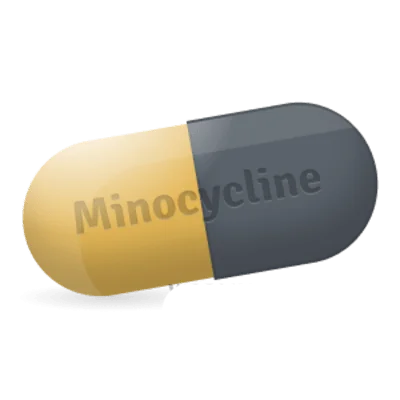
Minocycline on this page is presented as capsules. The capsule should be swallowed whole rather than opened, crushed, or chewed, unless a prescriber has provided a specific alternative instruction.

Dosage and usage

  • Take the oral capsule by swallowing it with sufficient fluid.
  • Follow the exact dose in milligrams, frequency, and treatment duration stated on the pack or prescribed by the clinician; these details are not provided here.
  • Follow the prescribed timing in relation to meals and time of day; these details are not provided here.
  • Remain upright after taking the capsule to reduce the risk of oesophageal irritation.
  • Do not take mineral supplements, antacids, multivitamins, or fortified products at the same time unless the treatment instructions allow it, because calcium, iron, magnesium, and zinc can reduce absorption [1].
  • If a dose is missed, follow the instructions provided for the regimen and do not double the next dose.

How it works

Minocycline enters susceptible bacterial cells and binds to the 30S ribosomal subunit. Ribosomes are cellular structures that assemble proteins. By interfering with the attachment of transfer RNA, minocycline prevents bacteria from adding new amino acids to growing proteins.

Without adequate protein production, bacterial growth and replication slow. This is described as a bacteriostatic action, meaning the medicine mainly suppresses bacterial multiplication rather than rapidly destroying every bacterial cell. The immune system then helps clear the remaining organisms.

The mechanism explains why minocycline cannot treat viral infections. Viruses do not use bacterial 30S ribosomes, so tetracycline antibiotics have no direct antibacterial target in influenza or the common cold. The WHO AWaRe antibiotic book places this distinction within responsible antibiotic use and antimicrobial stewardship [3].

Minocycline’s tissue penetration can be useful for some skin infections and inflammatory acne. The same pharmacological distribution helps explain why vestibular effects, pigmentation changes, autoimmune reactions, and other systemic adverse effects require attention during prolonged treatment.

Indications

Minocycline is used for susceptible bacterial infections and selected inflammatory dermatological conditions. The clinical decision depends on the confirmed or suspected organism, local resistance patterns, treatment history, and the patient’s risk profile.

Dermatological applications in acne and rosacea

Dermatologists may prescribe oral minocycline for moderate-to-severe inflammatory acne when topical treatment alone has not controlled deeper papules, pustules, or nodules. It reduces the number of susceptible bacteria involved in acne and dampens inflammatory activity around the hair follicle. NICE guidance places oral antibiotics within a structured acne-treatment plan rather than as indefinite monotherapy [2].

Rosacea is more complex. Oral antibiotics may be selected when inflammatory papules and pustules are prominent, while persistent facial redness, visible blood vessels, and flushing may need different approaches. Minocycline is not a universal treatment for every rosacea feature.

Antibiotic courses for acne should be reviewed rather than continued automatically. Dermatology practice commonly combines systemic antibacterial treatment with a topical non-antibiotic agent to reduce relapse and limit prolonged antibiotic exposure.

Systemic bacterial infections

Minocycline can be used for selected respiratory, genitourinary, skin, and other bacterial infections when the causative organism is susceptible. It does not treat influenza, the common cold, or a viral sore throat because these illnesses are caused by viruses rather than bacteria.

For systemic infection, culture and susceptibility testing may guide treatment. A medicine that worked for a previous infection may be unsuitable for a new illness. Antibiotic selection also depends on allergy history, organ function, pregnancy status, and interactions with minerals or other medicines. Treatment should be reassessed if symptoms fail to improve as expected. Follow-up helps determine whether the diagnosis or antibiotic choice needs to change.

Do not save leftover capsules for a future cough, sore throat, or skin flare. The cause may be viral, resistant to minocycline, or better treated with another medicine.

Comparison

The most suitable option depends on the diagnosis rather than on a simple ranking of medicines. A prescriber may select a tetracycline, a different antibiotic, a topical treatment, or a retinoid according to the organism, skin findings, pregnancy status, and previous response.

Treatment category Main clinical role Key limitation
Minocycline Oral treatment for susceptible bacterial infections and inflammatory acne Dizziness, pigmentation, autoimmune effects, and antibiotic resistance require monitoring
Doxycycline Tetracycline option for acne and several bacterial infections Gastrointestinal irritation and sun sensitivity can be troublesome
Topical retinoids or benzoyl peroxide Local acne treatment and relapse prevention Skin dryness, irritation, and slower improvement may occur

Doxycycline and minocycline share a tetracycline mechanism, yet their tolerability profiles differ. Minocycline is more associated with vestibular symptoms, while doxycycline is often linked with gastrointestinal irritation and photosensitivity.

Retinoids act on abnormal follicular keratinisation rather than bacterial protein synthesis. Isotretinoin is reserved for severe or treatment-resistant acne under specialist supervision because of its significant pregnancy-related risks and monitoring requirements. Acitretin has a different dermatological role and is not a routine substitute for minocycline in acne.

Benzoyl peroxide acts topically and does not expose the whole body to a systemic antibiotic. It can cause dryness or irritation, yet it is often useful alongside an oral antibiotic to reduce bacterial resistance pressure.

Contraindications

It should not be used by a person with a serious previous hypersensitivity reaction to minocycline or another tetracycline.

  • Pregnancy, especially later pregnancy, because tetracyclines can affect fetal bone and tooth development.
  • Breastfeeding, because minocycline may pass into breast milk.
  • Children younger than the age specified by the prescriber, due to permanent tooth discolouration and effects on developing bone.
  • Previous liver disease or abnormal liver tests.
  • Kidney impairment.
  • Systemic lupus erythematosus or a history of autoimmune reactions.
  • Raised intracranial pressure or unexplained severe headaches.
  • Previous drug-related pigmentation.
  • Allergy to tetracycline-class antibiotics.
  • Concurrent isotretinoin or acitretin treatment.

When this is not for you

Minocycline is not suitable for everyone. NOT for you if a prescriber has identified a serious tetracycline allergy or a contraindicated interaction; ask for an alternative treatment plan. Talk to a clinician before using it if you are pregnant or breastfeeding, have liver or kidney problems, autoimmune disease, severe headaches, or a history of pigmentation changes. Do not combine it with isotretinoin or acitretin unless your prescriber gives explicit medical direction.

Stop and seek urgent medical care for facial swelling, breathing difficulty, blistering rash, widespread peeling, yellowing of the skin, severe weakness, seizures, or a severe headache with visual symptoms.

Side effects

Minocycline can cause gastrointestinal, neurological, dermatological, and immune-mediated adverse effects. The likelihood varies with duration, dose, individual susceptibility, and the condition being treated. FDA prescribing information lists dizziness, vertigo, nausea, diarrhoea, headache, pigmentation changes, and rare serious reactions among clinically relevant concerns .

Common gastrointestinal and vestibular effects

Possible gastrointestinal effects include:

  • Nausea
  • Abdominal discomfort or pain
  • Diarrhoea
  • Reduced appetite
  • Oesophageal irritation or painful swallowing

Vestibular symptoms are a distinctive practical concern. Dizziness, vertigo, imbalance, or a sensation that the surroundings are moving may appear after a dose, especially early in treatment. Driving, cycling, climbing, and operating machinery are unsafe while these symptoms are present.

Headache can occur with or without dizziness. A severe headache accompanied by blurred vision, visual obscurations, vomiting, or pulsatile ringing in the ears needs urgent medical assessment because raised intracranial pressure has been reported with tetracycline-class medicines.

Photosensitivity and longer-term complications

Sun sensitivity can occur. Use protective clothing and limit intense midday sun exposure during treatment, especially if the skin burns easily. A broad-spectrum sunscreen may reduce exposure but does not remove the need for sensible sun avoidance.

Longer courses may be associated with blue-grey or brown pigmentation of the skin, scars, nails, gums, teeth, or internal tissues. Autoimmune hepatitis, lupus-like reactions, serum sickness-like reactions, and drug hypersensitivity syndromes are uncommon but clinically important.

Severe watery or bloody diarrhoea can indicate Clostridioides difficile infection, which may develop during or after antibiotic treatment. CDC guidance treats significant antibiotic-associated diarrhoea as a reason for prompt clinical evaluation rather than self-treatment with anti-diarrhoeal medicines [4].

If dizziness begins after a capsule, sit or lie safely and avoid driving until it has fully cleared. Repeated vertigo, fainting, severe headache, or visual changes requires prompt medical assessment.

Common mistakes

Several habits can reduce treatment benefit or increase adverse effects:

  • Taking the capsule with an iron tablet, calcium supplement, magnesium antacid, or zinc product.
  • Swallowing it immediately before lying down.
  • Stopping after one or two improved days during an active bacterial infection.
  • Continuing leftover capsules for a new illness without a diagnosis.
  • Driving after experiencing vertigo or imbalance.
  • Assuming every sore throat or cough requires an antibiotic.
  • Combining minocycline with isotretinoin without explicit medical direction.
  • Ignoring persistent diarrhoea because it began after the antibiotic course.
  • Spending prolonged periods in strong sun without protective clothing.
  • Continuing treatment despite pigment changes, joint symptoms, dark urine, or yellowing skin.

What doctors say

In clinical practice, physicians usually judge minocycline by the diagnosis, bacterial susceptibility, treatment duration, and response rather than by capsule strength alone. Acne may improve gradually, and inflammatory lesions often require several weeks of consistent treatment before the benefit is clear.

A dermatologist will usually avoid indefinite antibiotic monotherapy. Topical maintenance treatment can help reduce relapse after the oral antibiotic course ends. Persistent acne despite treatment may reflect hormonal drivers, follicular occlusion, incorrect application of topical products, or an alternative diagnosis.

For infection, a doctor expects symptoms to improve only when the illness is caused by a susceptible bacterium. Fever, worsening pain, spreading redness, breathing difficulty, or deterioration after treatment begins may signal treatment failure or a complication.

One practical point is frequently missed: minocycline-related dizziness can be more disruptive than stomach upset. Patients who drive for work, use ladders, or operate machinery should plan for that possibility before starting treatment.

Frequently asked questions

How long does Minocycline take to help acne?

Acne improvement is gradual and may require several weeks of consistent treatment. NICE acne guidance published in 2021 recommends reviewing treatment response rather than extending oral antibiotic therapy without a clear plan. The FDA prescribing information from 2023 also supports using the medicine for an appropriate indication and duration, not as an open-ended acne treatment.

Can Minocycline treat a common cold or influenza?

No. Influenza, most common colds, and many viral sore throats do not respond to antibacterial medicines. WHO antibiotic stewardship guidance published in 2022 explains that antibiotics should be reserved for illnesses caused by susceptible bacteria. Minocycline should be used for a bacterial diagnosis or a clinically justified suspected bacterial infection.

Can Minocycline be taken with iron or calcium?

Iron and calcium can bind minocycline in the intestine and reduce absorption. FDA medication guidance published in 2023 advises separating tetracycline antibiotics from mineral products and antacids according to the prescribed schedule. The same practical concern applies to magnesium, zinc, and multivitamins containing these minerals.

Is dizziness a normal reaction to Minocycline?

Dizziness and vertigo are recognised reactions to minocycline and may affect balance or driving ability. FDA prescribing information from 2023 identifies vestibular symptoms among adverse effects requiring attention. Severe dizziness, fainting, a serious headache, or visual disturbance needs prompt clinical assessment.

Can Minocycline be used during pregnancy?

Minocycline requires pregnancy-specific medical review because tetracycline exposure can affect developing teeth and bones. The 2023 FDA pregnancy information associated with tetracycline-class medicines describes fetal and childhood developmental concerns. A person who is pregnant, planning pregnancy, or breastfeeding should not start or continue minocycline without a treatment decision from the prescriber.

Can Minocycline be taken with isotretinoin?

The combination requires medical supervision because tetracyclines and isotretinoin have both been associated with raised intracranial pressure. The 2023 FDA prescribing information and dermatology guidance treat severe headache or visual symptoms during either treatment as clinically significant. Do not combine them independently or use leftover capsules while taking isotretinoin.

What should happen if severe diarrhoea develops?

Severe, persistent, watery, or bloody diarrhoea during or after antibiotic treatment may indicate Clostridioides difficile infection. CDC clinical guidance updated in 2024 recommends prompt assessment rather than self-treatment with anti-diarrhoeal products. The medicine may need to be stopped or changed after a clinician evaluates the symptoms.

Do you offer anonymous delivery?

Your order will be securely packed and shipped within 24 hours. This is exactly what your package will look like (images of an actual item sent). It has the size and look of a regular private letter (24x11x0.7 cm) and its contents cannot be seen.

Comparison

Minocycline: Reviews and Experiences

3.8
Based on 4 reviews
Sara, 34
Dubai
Two months
Verified
Rating: 4 out of 5

I used the prescribed capsule schedule for inflammatory acne. The first week brought mild nausea, and improvement was gradual rather than immediate. By the second month, the deeper spots were less frequent, but I still needed topical treatment.

12 Oct 2026
Omar, 41
Abu Dhabi
Several days
Verified
Rating: 2.5 out of 5

Dizziness appeared after several doses, mostly when I stood up quickly. I stopped driving and contacted my clinic. The symptom settled after the treatment plan was changed.

21 Oct 2026
Aisha, 38
Sharjah
Prescribed course
Verified
Rating: 5 out of 5

Minocycline helped a recurring skin infection after the culture showed susceptibility. I took each capsule with plenty of water and kept my mineral supplement at a separate time.

26 Oct 2026
Khalid, 45
Al Ain
Prescribed course
Verified
Rating: 3.5 out of 5

My acne improved, but sun exposure caused faster redness than usual. I had to change my outdoor routine, and the course was not as convenient as I expected.

8 Nov 2026

Sources

  1. U.S. Food and Drug Administration (2023). Minocycline hydrochloride prescribing information.
  2. National Institute for Health and Care Excellence (2021). Acne vulgaris: management (NG198).
  3. World Health Organization (2022). The WHO AWaRe antibiotic book.
  4. Centers for Disease Control and Prevention (2024). Clinical guidance for Clostridioides difficile infection.
Get our free app Shop faster and track your orders 4.1 · 499 reviews Install