Verified
I used Karela alongside a more structured breakfast routine. I did not notice a dramatic change, but the tablets were easy to take and caused no stomach problems. I still kept my usual glucose checks.
27 Sep 2026

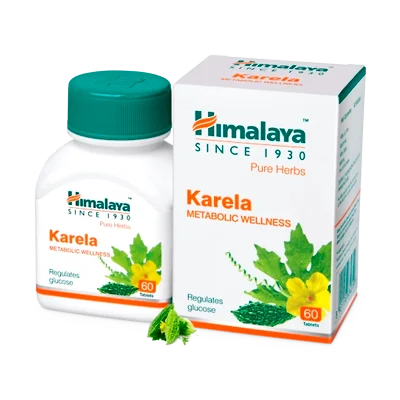
Karela is a bitter melon tablet for adults interested in metabolic wellness. Its plant compounds are traditionally used alongside balanced nutrition and regular physical activity. The product is intended to support healthy glucose regulation rather than replace diabetes treatment.
Karela is a herbal tablet product containing bitter melon, also known as Indian bitter melon or Momordica charantia. It is intended for adults seeking support for metabolic wellness and healthy glucose regulation. Its plant compounds are traditionally used to complement balanced nutrition and regular physical activity.
Karela refers to bitter melon, a climbing plant in the Cucurbitaceae family. Its scientific name is Momordica charantia. The fruit has a ridged surface and a distinctive bitter taste, while the leaves, seeds, and fruit have all been used in traditional food and herbal practices.
Research on Momordica charantia has examined several plant constituents, including charantin, cucurbitane-type triterpenoids, and polypeptide-p. These compounds have been investigated for possible effects on glucose metabolism, insulin signalling, and carbohydrate handling, though laboratory findings do not establish that every commercial preparation produces the same clinical result [1].
Karela is supplied as tablets for oral use. Follow the stated serving instructions for this product, take the tablets with water, and avoid creating a larger serving because the expected effect seems slow.
Practical use points include:
Bitter melon contains plant compounds that may influence glucose metabolism, insulin signalling, and carbohydrate handling. The proposed effects are associated with constituents such as charantin, cucurbitane-type triterpenoids, and polypeptide-p. These compounds may contribute to glucose-lowering activity, but the clinical effect can vary between preparations and individuals.
The phrase “regulates glucose” describes the intended wellness role of Karela. It does not mean that the tablets can normalise blood glucose in every person or treat diabetes independently.
Karela may be considered by adults who want herbal support alongside established lifestyle measures.
A systematic review in Alternative Medicine Review described promising traditional and laboratory evidence but also identified the need for stronger human trials [2].
Karela belongs to the herbal supplement category. It should be assessed by its intended plant-based role rather than compared with prescription medicines as if they had equivalent evidence or dose control.
| Approach | Main role | Key limitation |
|---|---|---|
| Karela tablets | Herbal support for metabolic wellness | Strength and clinical effect may vary between preparations |
| Food-based bitter melon | Vegetable source of bitter melon compounds | Amount consumed is not a standardised supplement dose |
| Prescribed glucose-lowering treatment | Medical management of diagnosed diabetes | Requires individual selection, monitoring, and adjustment |
Prescription treatment has defined active substances, clinical dosing protocols, and established monitoring requirements. Karela does not provide a substitute for that level of treatment control. The plant may be useful as a supportive option for some adults, but results are not guaranteed.
Karela may interact with medicines that lower blood glucose. The interaction is pharmacodynamic: both the supplement and the medicine may push glucose downward, even when neither product is excessive by itself. Other medication interactions are less clearly established, so a complete medication list should be reviewed before regular use.
Karela is NOT for you if you have repeated low blood glucose, use glucose-lowering medicine, are pregnant, or have a relevant allergy or organ disease.
Bitter melon preparations are often tolerated by adults when used appropriately, yet digestive symptoms can occur. Possible effects include abdominal discomfort, nausea, loose stools, constipation, or a bitter aftertaste.
The main practical concern is an additive glucose-lowering effect when Karela is combined with insulin or diabetes tablets. Symptoms of low blood glucose can include sweating, trembling, palpitations, hunger, dizziness, blurred vision, irritability, and confusion. Severe hypoglycaemia can cause loss of consciousness or seizures.
Allergic reactions are possible. Rash, facial swelling, wheezing, or difficulty breathing requires urgent medical attention.
Pregnancy requires special caution. Concentrated bitter melon preparations have not established a suitable safety profile for routine use during pregnancy, and the plant has traditionally raised reproductive safety concerns. Children should not use Karela unless a qualified clinician has specifically advised it.
A review of Momordica charantia in the Journal of Ethnopharmacology described traditional use and pharmacological research while also showing why preparation, dose, and clinical context matter when interpreting bitter melon evidence [3].
Several habits can reduce the usefulness of Karela or create avoidable risk:
One detail is easy to miss: hypoglycaemia can resemble tiredness, anxiety, or hunger. A person may misread the early symptoms and take another serving, which can worsen the episode.
In clinical practice, physicians generally distinguish between a food plant, a concentrated herbal product, and a regulated medicine. Karela tablets are best approached as supportive metabolic wellness products, not as a primary treatment for diabetes.
A doctor would usually focus on three points: the person’s diagnosis, current glucose treatment, and response after starting the supplement. HbA1c, fasting glucose, kidney function, and symptoms provide more useful information than relying on how energetic or well a person feels.
The WHO monograph framework for medicinal plants supports careful attention to plant identity, preparation, traditional use, and safety rather than assuming that every formulation has identical activity [4]. EMA principles for herbal medicinal products also separate traditional use from the stronger evidence expected for treatment claims.
Karela is a bitter melon herbal tablet product intended to support metabolic wellness and healthy glucose regulation. Its plant source is Momordica charantia, also called Indian bitter melon. Research reviewed by WHO and published studies suggests possible glucose-related activity, but evidence does not support using it as a stand-alone treatment for diabetes. The product should be used within a broader nutrition and monitoring plan. The 2009 WHO monograph on medicinal plants describes bitter melon within a traditional-use context rather than as a replacement for diabetes treatment.
No. Karela should not replace insulin, metformin, sulfonylureas, or another prescribed diabetes treatment. NICE guidance for type 2 diabetes, including recommendations current before 2026, places proven glucose-lowering medicines and lifestyle measures at the centre of diabetes management. A supplement can also complicate glucose control when combined with treatment, so medication changes should not be based on Karela alone.
It may add to the glucose-lowering effect of diabetes medicines, although the degree of effect varies between people and preparations. Symptoms such as trembling, sweating, sudden hunger, dizziness, blurred vision, or confusion require prompt attention. WHO discussions of medicinal plants support monitoring for pharmacological effects when herbal products are combined with medicines. Do not take an additional serving to compensate for a reading that seems high. The 2009 WHO monograph supports careful monitoring when medicinal plants may have pharmacological effects.
Karela is not a suitable routine choice during pregnancy without specific medical direction. Concentrated bitter melon preparations lack sufficient safety evidence for general use during pregnancy, and traditional reproductive safety concerns have been described in pharmacological literature. WHO herbal medicine principles support avoiding unnecessary concentrated preparations when pregnancy safety is uncertain. Breastfeeding also warrants individual advice before use. The 2009 WHO monograph provides traditional-use information but does not establish routine pregnancy safety for concentrated products.
Combining the tablet with Karela juice may increase total exposure to bitter melon compounds. The strength of juice varies according to the amount of fruit, preparation method, and serving size, so the combined effect cannot be predicted reliably. EMA guidance on herbal preparations supports treating different preparations as separate exposures rather than assuming they are equivalent. Use one format at a time unless a qualified clinician has assessed the combination. The 2009 WHO monograph supports identifying the preparation and dose before assessing its use.
There is no reliable universal timeframe for a glucose effect from Karela tablets. Studies of Momordica charantia have used different preparations and durations, which prevents a single expected onset from being applied to every product. A 2024 clinical approach should still rely on glucose readings and HbA1c rather than waiting for a noticeable sensation. Persistent high or low readings require review of the complete diabetes plan. NICE guidance in 2022 also supports using glucose measurements and HbA1c to guide diabetes care.
Both come from bitter melon, but they are different forms. Fresh Karela is a food, while tablets are a prepared herbal product with a serving instruction. Nutritional values, plant-compound concentration, and exposure can differ between fresh fruit, Karela juice, Karela leaf tea, and tablets. WHO medicinal-plant documentation supports identifying the preparation before making assumptions about its expected activity. The 2009 WHO monograph also distinguishes traditional plant use from evidence for a specific tablet formulation.
Your order will be securely packed and shipped within 24 hours. This is exactly what your package will look like (images of an actual item sent). It has the size and look of a regular private letter (24x11x0.7 cm) and its contents cannot be seen.

I used Karela alongside a more structured breakfast routine. I did not notice a dramatic change, but the tablets were easy to take and caused no stomach problems. I still kept my usual glucose checks.
The first few days were comfortable. Later, I noticed sweating and light-headedness after taking my diabetes tablets and Karela together. I stopped the supplement and arranged a medication review rather than increasing the serving.
I preferred tablets to preparing Karela juice every morning. The bitter aftertaste was mild for me, though I found that taking them without enough water caused stomach discomfort.
I expected the supplement to replace part of my diabetes routine, which was a mistake. My clinician explained that Karela could only be considered supportive, so I returned to regular monitoring and kept the prescribed treatment unchanged.