


Verified
The first few days brought nausea after dinner, so I reduced meal size and drank fluids more often. By the fourth week, the nausea was much less noticeable, and my morning readings were more consistent.
20 Oct 2026
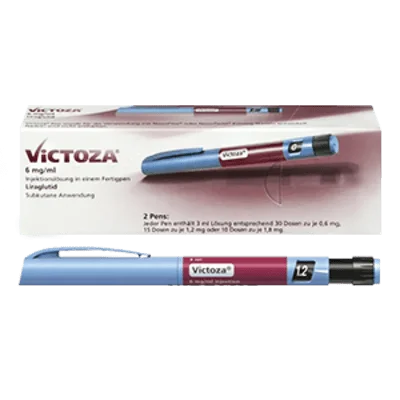
Victoza is a prescription injection for adults with type 2 diabetes. Its active ingredient, liraglutide, is a GLP-1 receptor agonist that helps regulate blood sugar by supporting insulin release and reducing glucagon activity.
Victoza is an injectable prescription medicine containing liraglutide for adults with type 2 diabetes. It is supplied as a pre-filled pen containing a solution for once-daily subcutaneous use; the dose is stated on the pack — follow the leaflet. Liraglutide acts on GLP-1 receptors to improve glucose-dependent insulin release, reduce glucagon secretion, and support blood-sugar control.
Victoza contains liraglutide, a glucagon-like peptide-1 receptor agonist. The solution is administered through a multi-dose Victoza pen.
The pen delivers the selected dose. A new needle is used for each injection, and the injection site can be changed without changing the prescribed dose.
Victoza is injected under the skin once daily. The injection may be given at any time of day, with or without meals. Dose escalation is used to improve gastrointestinal tolerability.
The adult titration schedule is:
The starting dose is used for treatment initiation and is not usually the long-term therapeutic dose. Dose changes should follow the prescribed plan.
Suitable subcutaneous sites include:
The site can change from one day to the next. There is no requirement to adjust the dose when moving between the abdomen, thigh, and upper arm.
A practical administration sequence is:
Do not inject Victoza into a vein or muscle. Do not share a pen, even if a new needle is attached. Sharing can transmit infection and can result in incorrect dosing.
If a dose is missed, take the next scheduled dose when it is due. Do not inject an extra dose to compensate. If more than three days have passed since the last dose, the prescribing clinician may advise restarting at the dose stated on the pack — follow the leaflet to reduce nausea and other gastrointestinal symptoms.
A pen should not be used if the solution appears cloudy or contains particles. The injection solution should be handled according to its approved storage instructions, and excessive heat or freezing can damage injectable medicines.
Liraglutide imitates the action of natural glucagon-like peptide-1, or GLP-1. After binding to GLP-1 receptors on pancreatic beta cells, it increases insulin secretion when blood glucose is elevated. This glucose-dependent action means insulin release is more closely linked to the glucose level than with medicines that stimulate insulin secretion independently of glucose.
Liraglutide also reduces glucagon secretion when glucose is high. Glucagon normally signals the liver to release stored glucose, so reducing excessive glucagon activity can lower hepatic glucose output. The combined effect improves fasting and post-meal glucose levels.
GLP-1 receptors are also present in areas involved in appetite and gastrointestinal motility. Liraglutide can slow gastric emptying and reduce food intake in some patients. Nausea is linked to these gastrointestinal effects, especially during the first weeks or after an increase in dose.
Victoza's glucose-lowering effect develops over repeated daily doses.
The American Diabetes Association places GLP-1 receptor agonists among glucose-lowering therapies that may be selected according to glycaemic needs, weight considerations, cardiovascular risk, kidney function, and treatment tolerability [2].
Novo Nordisk developed Victoza for the management of type 2 diabetes in adults when diet and physical activity alone do not provide adequate glycaemic control.
The medicine may be used alone or alongside other antidiabetic treatments, including metformin, a sulfonylurea, a thiazolidinedione, or insulin, when the combination is clinically appropriate. Victoza is intended for type 2 diabetes rather than routine treatment of type 1 diabetes mellitus or diabetic ketoacidosis. The product information authorised by the European Medicines Agency describes liraglutide as a GLP-1 analogue with effects on glucose regulation and appetite [1].
Victoza belongs to the GLP-1 receptor agonist class. Other diabetes treatments work through different pathways, so the choice depends on the person’s glucose pattern, kidney function, cardiovascular history, hypoglycaemia risk, weight goals, and tolerance.
| Treatment approach | Main action | Practical limitation |
|---|---|---|
| Liraglutide, a GLP-1 receptor agonist | Increases glucose-dependent insulin release and reduces glucagon activity | Daily injection and gastrointestinal symptoms |
| Metformin, a biguanide | Reduces hepatic glucose production and improves insulin sensitivity | Digestive effects and restrictions in advanced kidney impairment |
| Sulfonylurea | Stimulates pancreatic insulin secretion | Greater hypoglycaemia risk and possible weight gain |
A GLP-1 receptor agonist may suit adults who need additional glucose control and who may benefit from reduced appetite or a lower risk of hypoglycaemia when used without insulin secretagogues. Metformin remains a common foundation treatment because it is oral and targets hepatic glucose production. Sulfonylureas can lower glucose effectively but require attention to meals, activity, and low-blood-sugar symptoms.
The trade-off with Victoza is the injection route and the possibility of nausea, vomiting, diarrhoea, constipation, or reduced appetite. Its glucose-dependent insulin effect may reduce hypoglycaemia risk when used alone, but that protection does not remove the risk created by insulin or sulfonylureas.
Use is contraindicated in people with:
Thyroid C-cell tumours occurred in rodents exposed to liraglutide. The relevance to humans has not been established, but the warning is reflected in regulatory prescribing information. Report a neck lump, persistent hoarseness, trouble swallowing, or breathing difficulty for clinical assessment.
Victoza is not recommended during pregnancy for routine glucose control. Poorly controlled diabetes itself can harm the pregnancy, so treatment planning should occur before conception. Breastfeeding decisions require an individual assessment of diabetes treatment and infant needs.
Severe gastrointestinal disease, previous pancreatitis, gallbladder disease, and diabetic retinopathy require specific clinical consideration. Rapid improvement in glucose control can temporarily affect diabetic retinopathy in some patients.
Gastrointestinal reactions are the most familiar adverse effects of liraglutide. Nausea, diarrhoea, vomiting, constipation, abdominal discomfort, and reduced appetite are more likely during treatment initiation or after dose escalation. Many patients experience improvement as the body adapts, although persistent symptoms need clinical review.
Headache can also occur. Dehydration caused by vomiting or diarrhoea may worsen kidney function, especially in people who already have chronic kidney disease or take medicines that affect renal blood flow.
Common or clinically relevant reactions include:
The United States prescribing information identifies acute pancreatitis, gallbladder disease, serious allergic reactions, kidney injury associated with dehydration, and hypoglycaemia with certain combinations as safety concerns requiring medical attention [3].
Seek urgent medical assessment for severe, persistent abdominal pain that may spread to the back, repeated vomiting, swelling of the face or throat, difficulty breathing, fainting, or symptoms of severe hypoglycaemia. Pain under the right ribs with fever or yellowing of the skin can indicate a gallbladder problem.
One detail patients often miss is that vomiting and diarrhoea can affect blood-glucose control even when Victoza itself is being used correctly. Reduced food intake may also change the amount of insulin or sulfonylurea needed, which is why combination regimens require a planned monitoring strategy.
Several avoidable errors can reduce the benefit of Victoza or increase adverse effects:
Needle reuse can blunt the needle, cause more local trauma, and interfere with accurate delivery. Pen sharing remains unsafe even when the needle is changed.
A missed dose is usually handled by returning to the next planned dose, rather than trying to “catch up.” A longer interruption may require gradual reintroduction because tolerance to gastrointestinal effects can decrease during a treatment break.
Doctors generally assess Victoza by looking at sustained glucose improvement, tolerability, injection technique, appetite changes, weight trend, and the patient’s ability to follow the titration schedule. A strong early reduction in appetite does not replace HbA1c assessment.
A physician may keep the dose at the current step for longer when nausea or vomiting interferes with food and fluid intake. Escalating faster than prescribed can make the first weeks unnecessarily difficult.
The most useful clinical routine is simple: inject once daily, keep meals reasonably consistent during titration, record unusual glucose readings, and report persistent gastrointestinal symptoms. Missed doses should not be replaced with double dosing.
Liraglutide begins acting after administration, but the full treatment response develops over repeated daily doses and planned titration. HbA1c reflects glucose exposure over roughly two to three months, so the American Diabetes Association uses it as a longer-term measure rather than judging treatment from one reading. Guidance reviewed in 2025 continues to support assessing response through glucose records, HbA1c, tolerability, and treatment goals.
Victoza can be prescribed with insulin in selected adults with type 2 diabetes. The combination can increase hypoglycaemia risk, especially when insulin doses are not adjusted as food intake changes. The 2024 EMA product information supports combination use under clinical supervision, with glucose monitoring and possible adjustment of the insulin regimen.
Victoza is intended for type 2 diabetes and does not replace insulin in type 1 diabetes. It is also unsuitable for diabetic ketoacidosis, which requires urgent treatment. The WHO diabetes classification used in 2025 separates insulin-replacement therapy for type 1 diabetes from glucose-lowering treatment used for type 2 diabetes.
A missed dose should not be replaced by two injections on the same day. The next dose is generally taken at the usual scheduled time. If treatment has been interrupted for more than three days, the prescriber may recommend restarting at the initial titration dose; the 2024 EMA product information describes this approach to reduce gastrointestinal intolerance.
Victoza alone has a lower hypoglycaemia tendency than medicines that stimulate insulin regardless of glucose levels. The risk increases when liraglutide is combined with insulin, glyburide, glipizide, glimepiride, or another insulin secretagogue. The 2023 FDA prescribing information advises attention to hypoglycaemia when Victoza is used with these treatments.
Some adults lose weight because liraglutide can reduce appetite and slow gastric emptying. The amount varies, and weight change should not be treated as the only measure of treatment response. The 2024 EMA assessment documents describe weight reduction as a possible effect in adults with type 2 diabetes, while the central indication remains glycaemic control.
Severe persistent abdominal pain, repeated vomiting, facial swelling, breathing difficulty, confusion from low blood sugar, or signs of gallbladder disease require prompt medical assessment. A neck lump or persistent hoarseness also requires review because of the thyroid C-cell tumour warning. The 2025 MOHAP patient-safety principles support prompt evaluation of serious or unexpected reactions to prescription medicines.
Your order will be securely packed and shipped within 24 hours. This is exactly what your package will look like (images of an actual item sent). It has the size and look of a regular private letter (24x11x0.7 cm) and its contents cannot be seen.
The first few days brought nausea after dinner, so I reduced meal size and drank fluids more often. By the fourth week, the nausea was much less noticeable, and my morning readings were more consistent.
The pen was easier to use than I expected. I still needed reminders for the daily injection, and I did not increase the dose until the planned week because the first days caused constipation.
My appetite fell, but I also had two episodes of sweating and shakiness when meals were delayed. The treatment plan was adjusted, and I began checking glucose more carefully around meals.
The glucose readings improved, but vomiting after the dose increase was difficult. I contacted the clinic, paused further escalation, and tolerated the lower dose better.
The daily routine became manageable after the first two weeks. Weight change was modest, so I continued judging the treatment by glucose readings and HbA1c rather than expecting a rapid result.